 Discover all about Turkish People & Turkey! The most detailed information about Turkish Culture & Turkey, contents, topics of interest & much more…
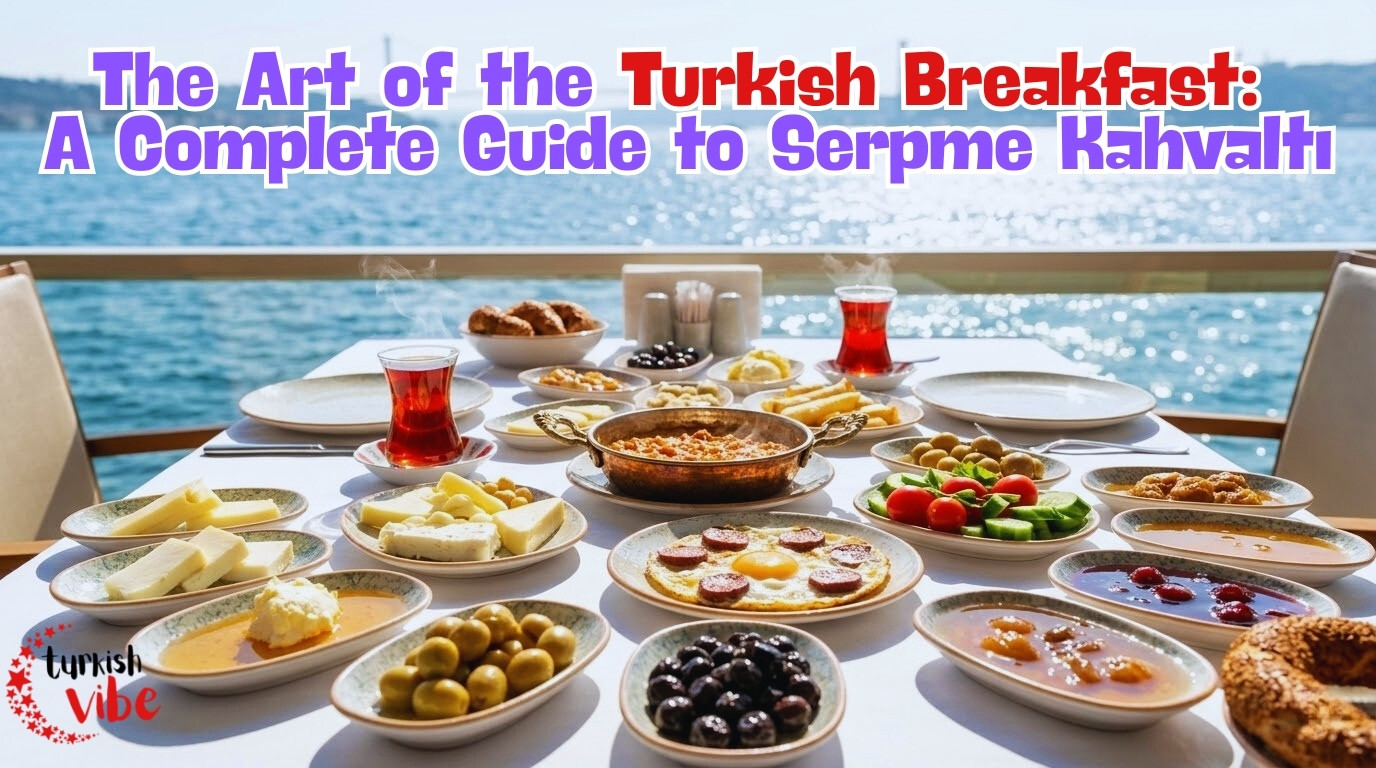
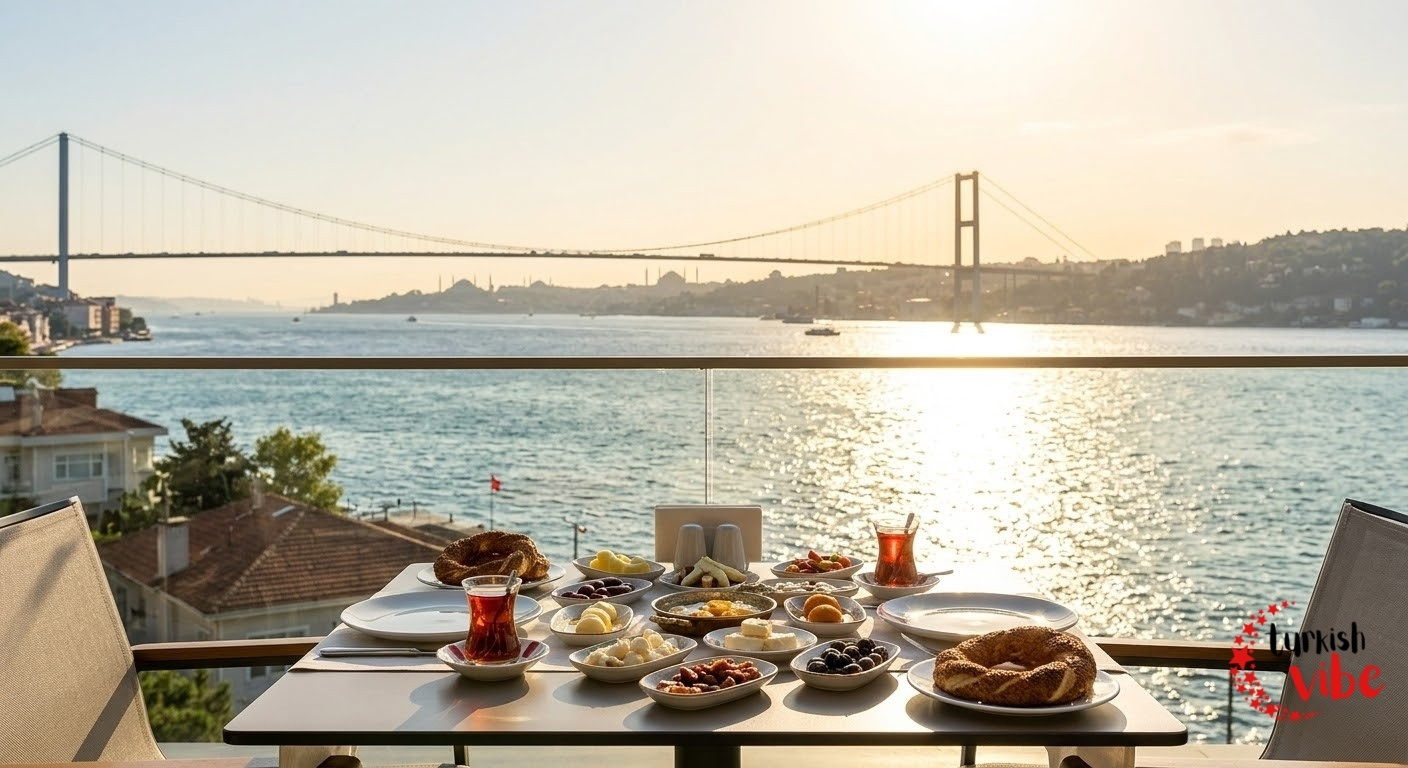
Walk through the streets of Karaköy or Beşiktaş on a Sunday morning and you will immediately notice the same ritual repeating on every corner. People aren’t just eating; they are leaning across crowded tables, passing small plates of olives, and refilling tulip-shaped glasses of tea for the fifth time. In Turkey, Turkish breakfast—or Kahvaltı—is the ultimate social foundation.
The term itself actually means “under-coffee,” referring to the meal you eat to prepare your stomach for that first, potent cup of Turkish coffee. But calling it a meal feels like an understatement. It is a symphony of contrasting flavors: the saltiness of aged Ezine cheese against the velvet sweetness of honey-drenched kaymak. In this 2026 guide, we are moving past the tourist traps to explore the true essence of the ‘Serpme’ experience, from the perfect Menemen to the hidden breakfast gardens where locals actually spend their weekends.
Quick Look: The Anatomy of a Perfect Table
| Category | The “Must-Have” | Why It Defines the Table |
| The Masterpiece | Bal-Kaymak | Pure honey over clotted buffalo cream. It’s the crown jewel. |
| The Debate | Menemen | Tomatoes, peppers, and eggs. Is it better with onions? You decide. |
| The Street Soul | Simit | The sesame-crusted bread that ties every single flavor together. |
| The Fuel | Turkish Tea | Served in tulip glasses, it must be mahogany red and endless. |
| The Spice | Sucuklu Yumurta | Spicy Turkish sausage that adds a bold, savory kick to the morning. |
The Anatomy of the Table: Essential Ensemble Cast
While the stars like Menemen get the attention, a true serpme kahvaltı depends on its foundational elements. These aren’t ‘sides’; they are essential, high-quality ingredients designed to create a complex web of savory, salty, and sweet notes that you can mix and match. The best tables will feature:
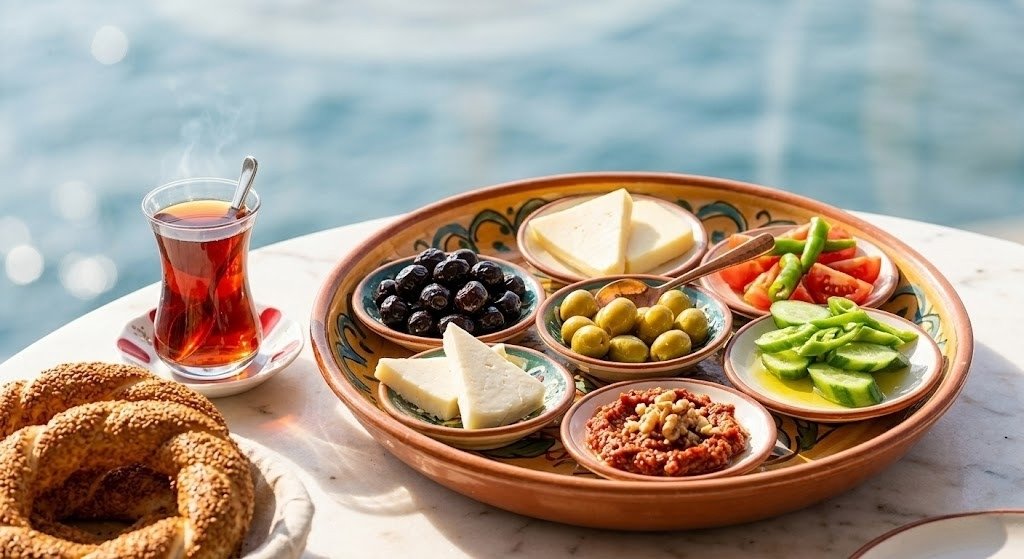
The Cheese Board: The non-negotiables are Ezine Peyniri (a salty, high-fat white sheep’s milk cheese from the Aegean) and Kaşar (a milder, semi-hard yellow cow’s milk cheese). But a premium table in 2026 should also feature regional specialities like Gravyer from Kars or Tulum from Izmir.
The Olives: Turkey is home to some of the world’s best olives. Expect to find both cured black olives (siyah zeytin) and marinated cracked green olives (yeşil zeytin) seasoned with olive oil and spices.
The Green & Fresh: A platter of fresh cucumbers, tomatoes (domates), and green peppers (biber) is essential for cutting through the richness. Locals will often sprinkle a little dried mint or sumac over them.
The Savory Additions: These are the intense flavor enhancers. Look for Acıka (a spicy red pepper paste with walnuts), Çemen (a pungent paste of fenugreek and cumin), and maybe a small bowl of strained Turkish yogurt with herbs.
This foundational ensemble is what you’ll find in almost every bite, anchoring the entire breakfast experience.
Egg Variations: The Sizzling Sahan Debate
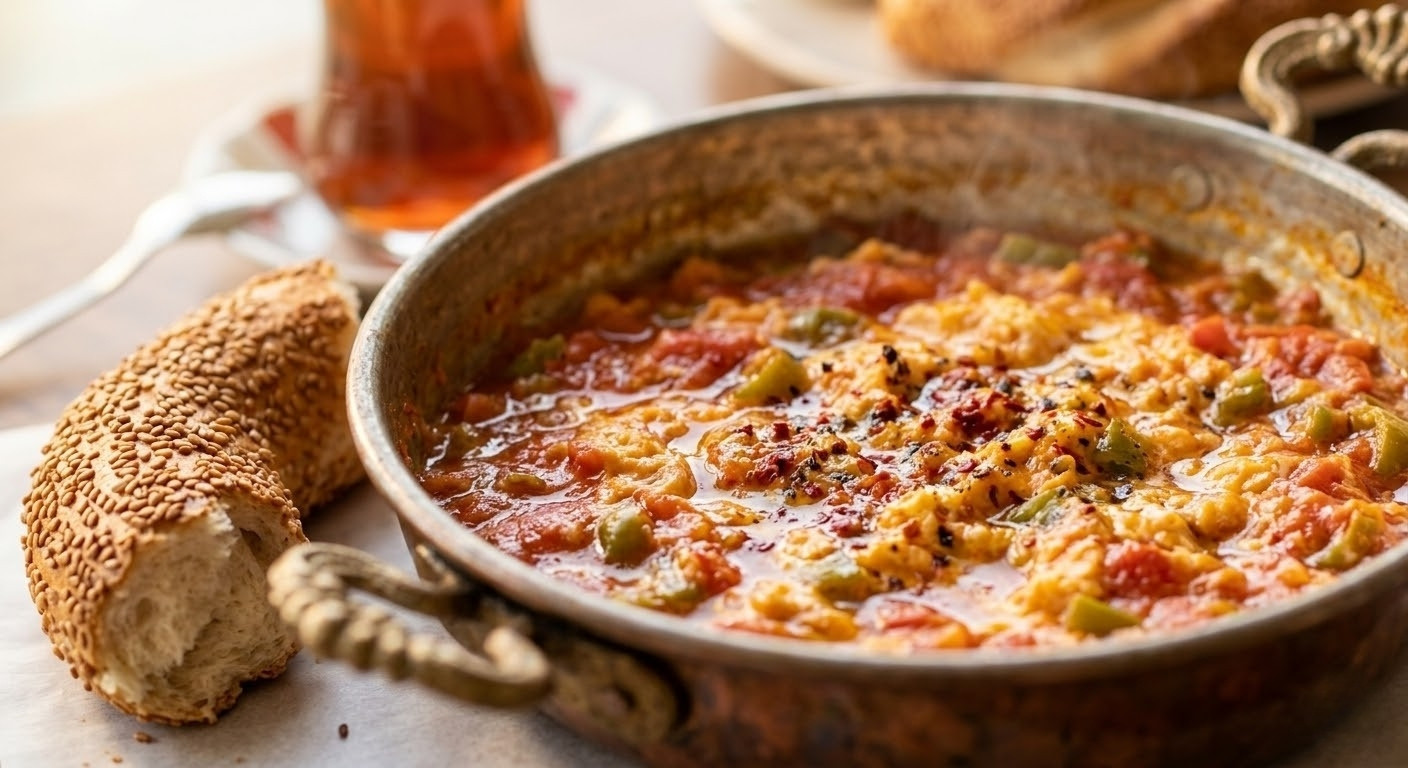
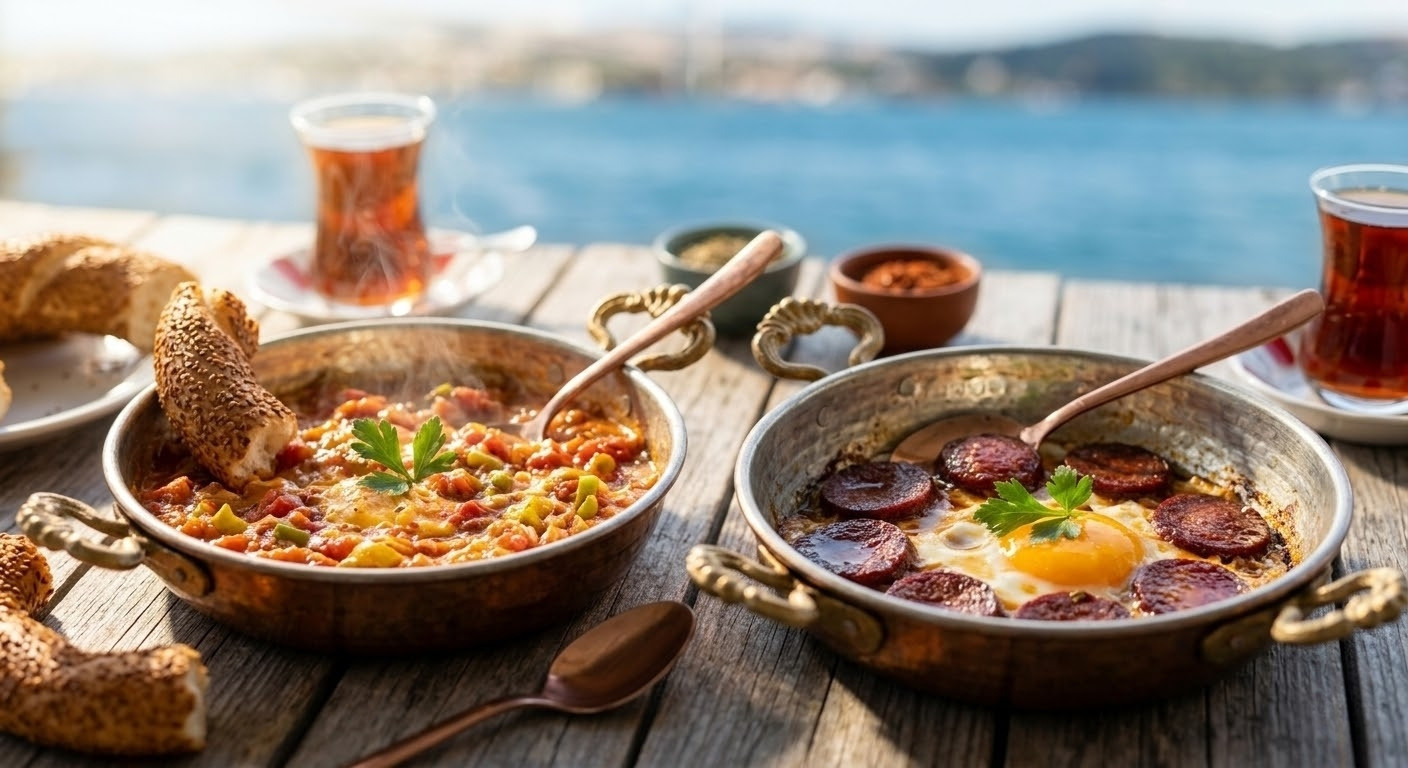
This is where the breakfast table shifts from a gentle conversation to a serious matter of personal preference. The star of any modern, high-quality serpme table is always an egg dish, often served in a sahan—a traditional, two-handled copper pan designed to keep everything piping hot. Forget typical scrambled eggs; in 2026 Istanbul, these are the two heavyweights you must know:
Menemen: The Local Soul
Menemen is a masterpiece of simple ingredients: fresh tomatoes, green peppers (biber), olive oil, spices (usually red pepper flakes and black pepper), and scrambled eggs. Its texture is moist, glistening, and incredibly aromatic. But beware, nothing is more contentious in Turkish culture than the Menemen debate: should it have onions (soğan)? The traditional recipe doesn’t include them, but many locals (myself included, occasionally) argue that a little grated onion adds a savory depth. Try both and decide your side in this great national discussion.
Sucuklu Yumurta: The Savory Powerhouse
If Menemen is the soul, Sucuklu Yumurta is the muscle. It’s simply spicy Turkish sausage (sucuk) fried with sunny-side-up eggs. The heat from the pan releases the pungent spices and fat from the sucuk, which then caramelizes the egg whites while leaving the yolk perfectly runny. It’s rich, salty, and designed to be scopped up with a generous piece of Simit or fresh-baked bread.
In almost any premium breakfast spot, you have to choose between the fresh, vegetal lightness of Menemen and the bold, spiced punch of Sucuklu Yumurta. My advice? Order both and share.
The Hidden Gem: Kuymak (Mıhlama)
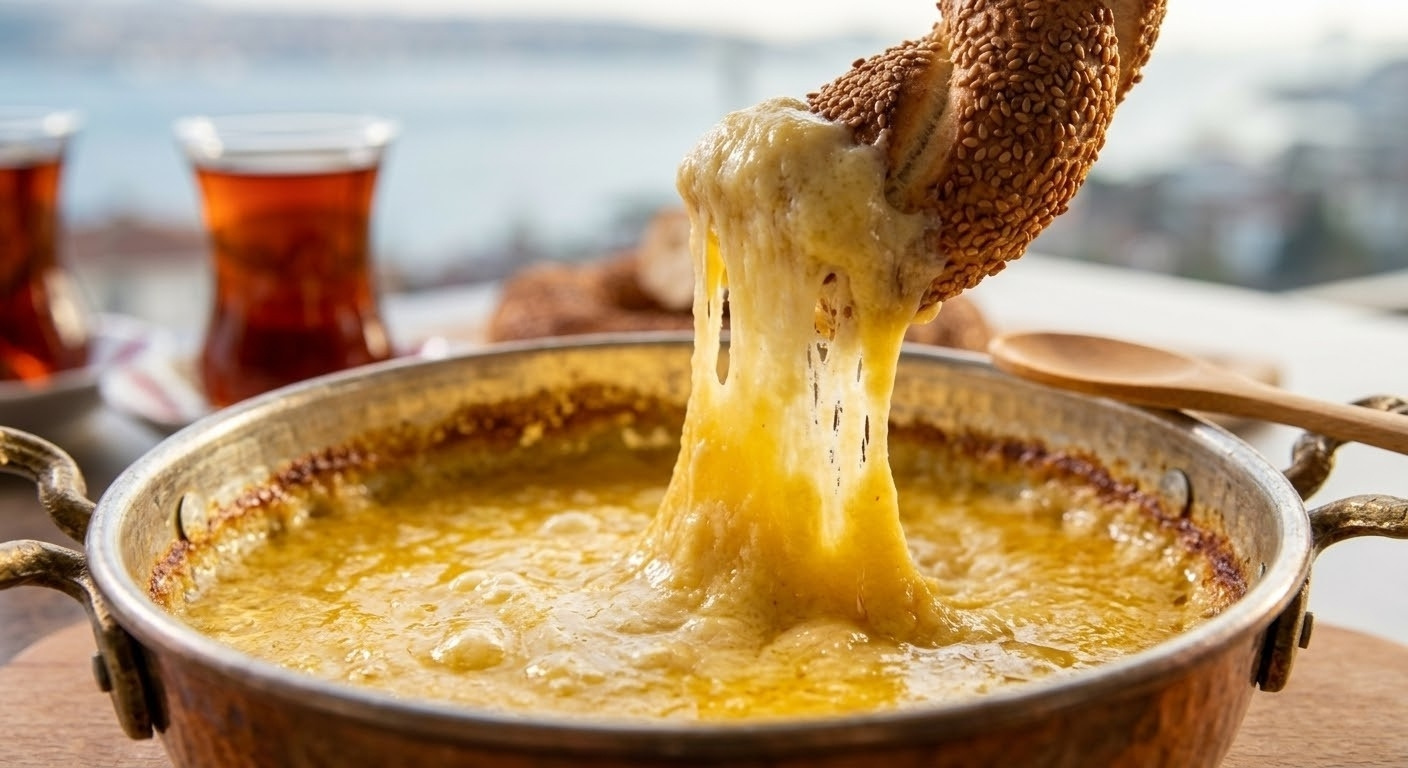
If you are lucky enough to see Kuymak (also known as Mıhlama) on a menu, do not hesitate for a second. Originating from the Black Sea region of Turkey, this dish is a decadent, molten blend of cornmeal, high-quality local butter, and a special stringy cheese (usually kolot cheese).
It arrives at the table in a sizzling pan, and the goal is to dip your bread and lift it high enough to see how far the melted cheese can stretch. It is rich, salty, and incredibly satisfying. While not every breakfast spot in Istanbul serves it, finding a place that does is like finding a hidden treasure. In 2026, it has become a “must-post” moment for foodies visiting the city, but the real reward is the complex, buttery flavor that lingers on your palate.
The Sweet Corner: Honey, Cream, and the Art of the Preserve
If the savory side of the table is the soul, the sweet side is the celebration. In Turkey, we don’t just have jam; we have an entire philosophy of sweetness designed to balance the saltiness of the olives and the heat of the sucuk.
Bal-Kaymak: The Crown Jewel
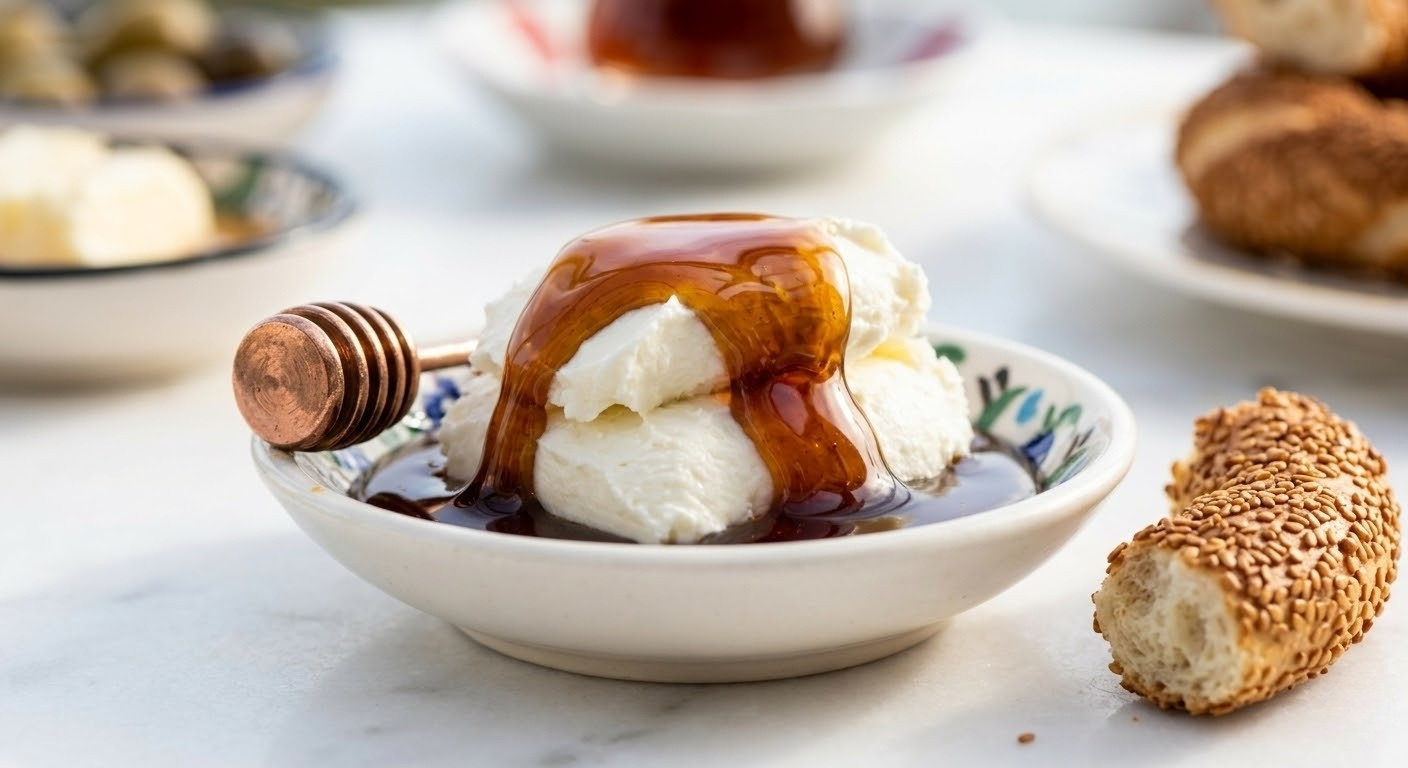
There is no other way to put it: Bal-Kaymak is the single most important component of a high-end breakfast. It consists of Kaymak—a thick, velvety clotted cream made from water buffalo milk—drenched in organic, golden honey (Bal).
The texture is heavenly. It is rich, dense, and spreads like silk on a warm piece of bread or a fresh Simit. In 2026, finding a place that serves genuine, farm-fresh buffalo kaymak is the mark of a truly great breakfast spot. It is the one thing you will dream about long after you leave Istanbul.
Reçel: The Garden in a Jar
Then come the preserves (Reçel). A proper table will feature at least three types. While strawberry and apricot are classics, look for the more exotic Turkish varieties:
Bergamot: Fragrant and citrusy.
Sour Cherry (Vişne): The perfect tart balance to the sweet honey.
Rose Petal (Gül): A delicate, floral experience that feels like tasting an Ottoman garden.
Green Walnut: A whole, young walnut preserved in syrup—bittersweet and deeply sophisticated.
Turkish Tea: The Infinite Flow of Liquid Gold
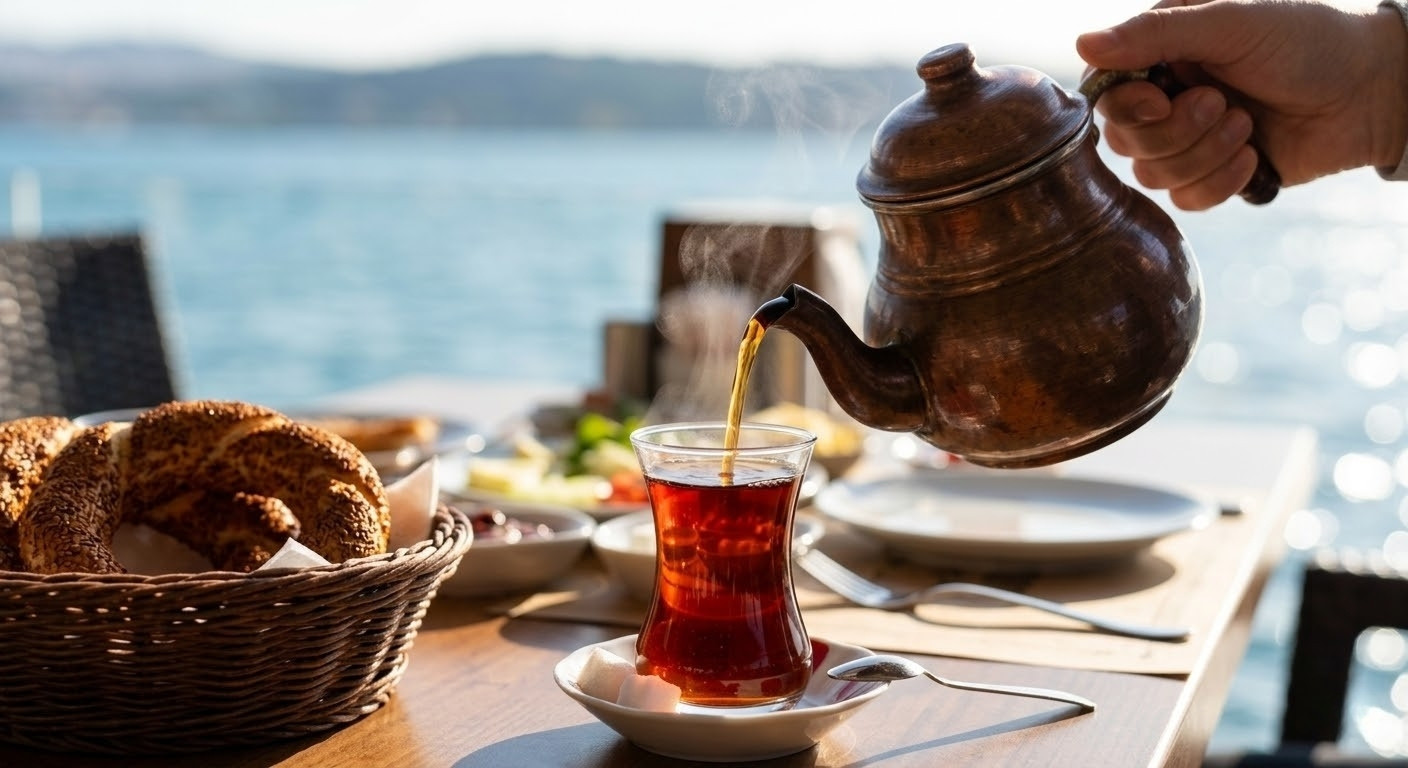
In many cultures, coffee is the morning wake-up call. In Turkey, coffee is the grand finale, but Tea (Çay) is the heartbeat of the entire meal. If you sit down for a breakfast in Istanbul, do not expect a single mug. Expect a continuous, mahogany-red stream of warmth served in clear, tulip-shaped glasses (ince belli).
The Science of the Double Pot
The secret to the perfect Turkish tea is the Çaydanlık—a double-stacked teapot. The bottom pot boils the water, while the top pot holds a very strong, concentrated tea. This allows your host (or the waiter) to customize your glass: Koyu (dark and strong) or Açık (light).
The Etiquette of the Refill
In a true 2026 Istanbul breakfast spot, your glass should never be empty for long. It is a silent language of hospitality; as long as the conversation continues, the tea must flow. You’ll notice the steam rising from the narrow waist of the glass, designed to keep the tea hot while allowing you to admire its “rabbit blood” (tavşan kanı) color—the local gold standard for a perfect brew.
Where the Locals Eat: Top Istanbul Breakfast Spots for 2026
The most common mistake visitors make is limiting their breakfast experience to the historical center. While Sultanahmet is beautiful, the true essence of Serpme Kahvaltı in 2026 is found in the bohemian, artistic, and affluent neighborhoods that hug the Bosphorus. Here are my curated, approved recommendations for a flawless morning.
Cihangir: The Bohemian Haven
This is my absolute favorite way to “get lost” in Istanbul. Cihangir, located in the hills above Beyoğlu, is the heart of the city’s artistic soul. The cafes here are small, independent, and full of character. You will sit on a narrow street, often shaded by vines, and share your table with local writers, actors, and some very well-fed neighborhood cats. The food is fresh, organic, and always served with a unique, creative flair.
Bebek & Nişantaşı: The Affluent Touch
When you need a change of pace and want to experience the sophisticated, modern side of the city, head to Bebek or Nişantaşı. Bebek offers iconic, open-air terraces right on the water’s edge of the Bosphorus, where you can watch the yachts go by. Nişantaşı is the luxury shopping district, and its breakfast spots are all about people-watching, impeccable service, and beautifully presented artisanal platters.
Kadıköy & Moda: The Asian Escape
I love heading over to the Asian side to walk along the coastal park and Bağdat Avenue; it has a unique energy that feels sophisticated yet profoundly local. Kadıköy’s famous Van Kahvaltı Evi (Van Breakfast House) is an institution. Van is a city in eastern Turkey known for having the most elaborate breakfast culture in the country. Here, you will experience unique items like Otu Peynir (herbed cheese) and various honey combinations that you won’t find anywhere else. Moda, just further south, is where you’ll find the coolest, new-generation coffee shops and brunch gardens.
Beşiktaş: The High-Energy “Breakfast Street”
For those who want to experience the raw, youthful energy of Istanbul, there is the legendary “Kahvaltıcılar Sokağı” (Breakfast Street) in Beşiktaş. Unlike the quiet terraces of Bebek, this narrow street is a vibrant, chaotic, and incredibly popular hub where dozens of small cafes compete for your attention.
It is a rite of passage for local students and young professionals. While it may lack the white tablecloths of Nişantaşı, it more than makes up for it with its fast-paced atmosphere and the sheer variety of modern breakfast twists (like filled pişi or chocolate-covered pancakes). It’s loud, it’s crowded, and it’s quintessentially Istanbul. If you enjoy being in the middle of the action, grab a small stool and enjoy the show.
The Grand Finale: Turkish Coffee and the Art of the Long Goodbye
After two hours of grazing through cheeses, honey, and eggs, there is a physical limit to how much one can eat. This is where the “Kahvaltı” (under-coffee) finally serves its purpose. As the small plates are whisked away, the atmosphere shifts from high-energy eating to quiet reflection.
The Ritual of the Finjan
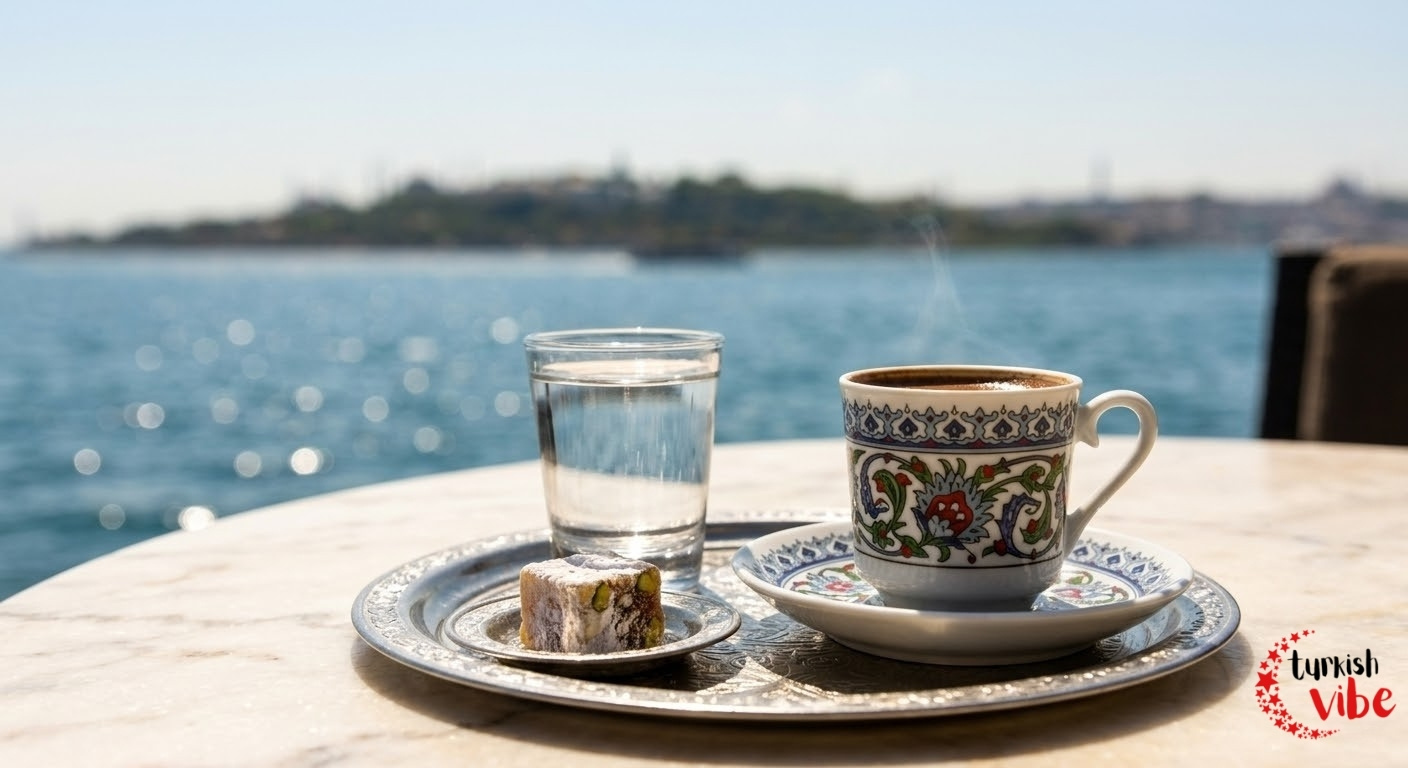
Turkish coffee (Türk Kahvesi) is served in small, porcelain cups called finjan. Unlike your breakfast tea, this is meant to be sipped slowly. It is thick, potent, and unfiltered, with the grounds settling at the bottom. In a premium 2026 setting, it is always served with a tall glass of cold water to cleanse the palate and a single, high-quality piece of double-roasted pistachio Turkish Delight (Lokum).
Reading the Future
You know that sometimes the most interesting conversations happen in the silences. In Turkey, once the coffee is finished, the cup is often turned upside down on its saucer to cool. This is for Fal—the ancient art of coffee ground fortune telling. (For details, see: Turkish Coffee Fortune Telling) Whether you believe in the shapes or not, it is the ultimate “social glue” that keeps people at the table for just thirty minutes more. As you know Turkish coffee is also cultural heritage by UNESCO.
Conclusion: More Than Just a Meal
A true Turkish breakfast is a marathon of hospitality, flavors, and connection. It is the moment where the city’s chaotic energy slows down to the pace of a simmering teapot. Whether you find yourself on a sun-drenched terrace in Bebek or a bohemian corner of Cihangir, remember that the goal is not to finish every plate—it is to enjoy the company, the view, and the story behind every bite.
When you sit at a Serpme Kahvaltı table in Istanbul, you aren’t just a tourist; for those few hours, you are part of an ancient tradition that defines the Turkish soul. So, take your time, pour another glass of tea, and let the city of two continents reveal its heart to you, one small plate at a time.
FAQ: Mastering the Turkish Breakfast Experience
What is the best time for a “Serpme Kahvaltı”?
While breakfast is served all week, the true social ritual happens on weekends. For the best experience and freshest products, aim to arrive at your chosen terrace between 10:30 AM and 11:00 AM.
Is it rude if I cannot finish all the small plates?
Not at all. A Serpme table is designed to represent abundance (bereket). It is perfectly normal to have leftovers, and your hosts will be more focused on whether you enjoyed the variety of flavors.
Can I find vegetarian or vegan options?
Turkish breakfast is a vegetarian’s paradise. Most of the spread consists of cheeses, olives, honey, and fresh vegetables. For vegans, focusing on olives, fruit preserves, tomato-cucumber salads, and Acıka (spicy pepper paste) provides a rich and satisfying meal.
Should I tip at a breakfast restaurant in Istanbul?
Yes, it is customary to leave a tip of around 10% if you are satisfied with the service. In high-end Bosphorus venues where service is a key part of the experience, a generous tip is appreciated.
Is Turkish tea or coffee included in the price?
In almost all fixed-price Serpme menus, Turkish tea is “sınırsız” (unlimited) and included. However, Turkish coffee is traditionally considered a separate ritual and is usually ordered and charged separately at the very end.1