 Discover all about Turkish People & Turkey! The most detailed information about Turkish Culture & Turkey, contents, topics of interest & much more…
“How a story set inside a 16th-century palace harem became one of the most-watched TV shows in history — and why it still holds up today.”

What is Magnificent Century?
Magnificent Century is a Turkish historical drama series about Sultan Suleiman the Magnificent and Hürrem Sultan, focusing on palace life, power struggles, and the Ottoman Empire.
The first time most people outside Turkey heard the name Suleiman the Magnificent, it wasn’t in a history class. It was through a television screen, watching an actor named Halit Ergenç stare down a room full of scheming viziers with those famously cold blue eyes. Muhteşem Yüzyıl — Magnificent Century — did something remarkable: it turned a 500-year-old empire into appointment viewing for housewives in Chile, students in Egypt, and grandmothers in the Balkans, all at the same time.
A note on the controversy
When Magnificent Century first aired in Turkey, it was not universally celebrated. Some historians objected to its focus on palace intrigue over military and political history. There were complaints that it portrayed the Sultan spending too much time in the Harem rather than on campaign. The then-Prime Minister Erdoğan even criticized it publicly. The production responded — eventually — by adding more battle sequences in later seasons.
Ironically, the very thing critics objected to — the intimate, domestic focus — is almost certainly why the show conquered the world. Grand battles look the same in every language. But a woman fighting for her children’s lives inside a palace, with no weapons except her intelligence? That translates everywhere.
For context, that’s roughly the entire population of the European Union. And it did all of this before streaming platforms made global hits the norm.
What is the show actually about?
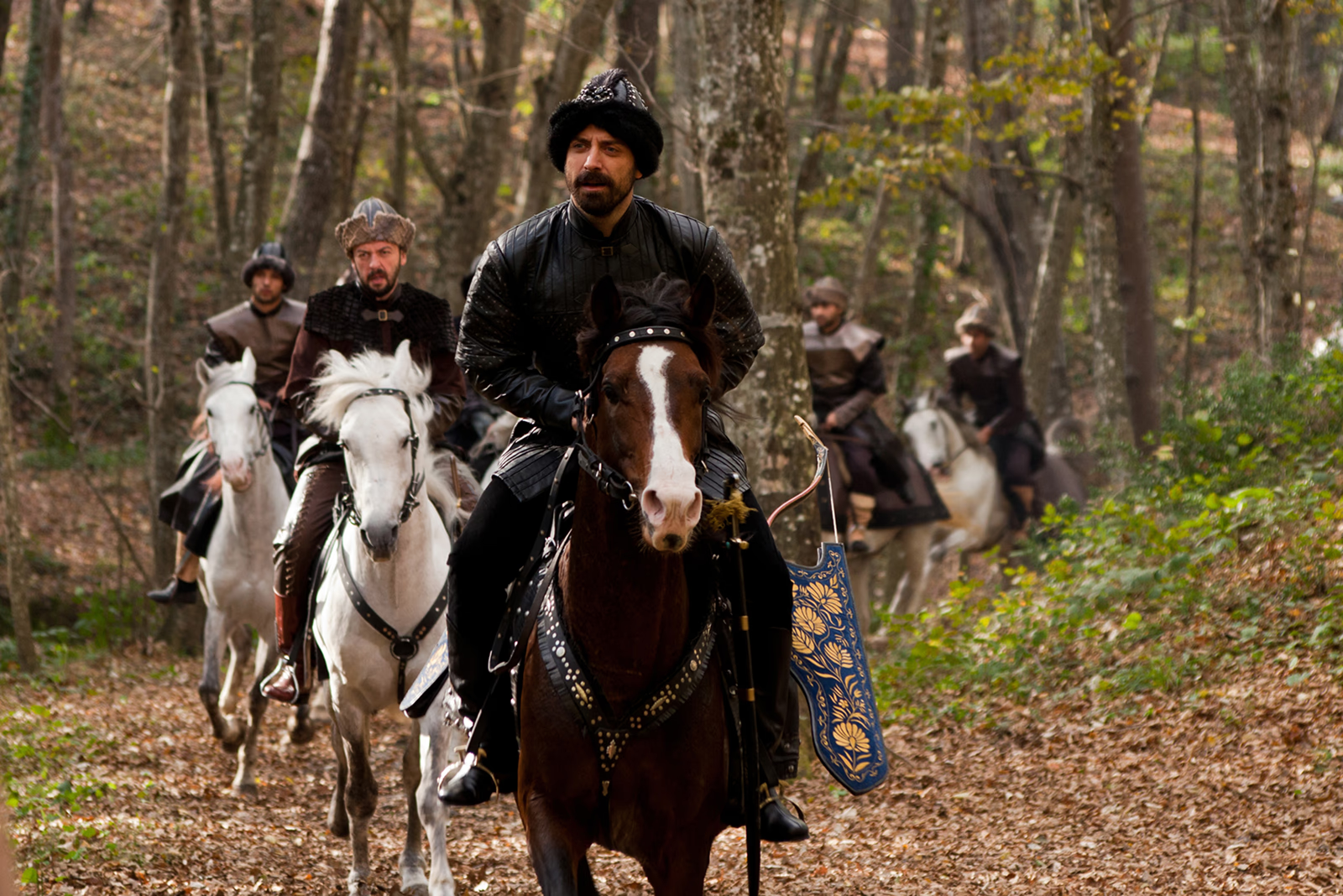
On the surface, Magnificent Century is a historical drama about Sultan Suleiman I, the longest-reigning Sultan of the Ottoman Empire, who ruled from 1520 to 1566. He expanded the empire to its greatest extent — from the walls of Vienna to the shores of the Indian Ocean — and is still celebrated in Turkey as a towering figure of Islamic history.
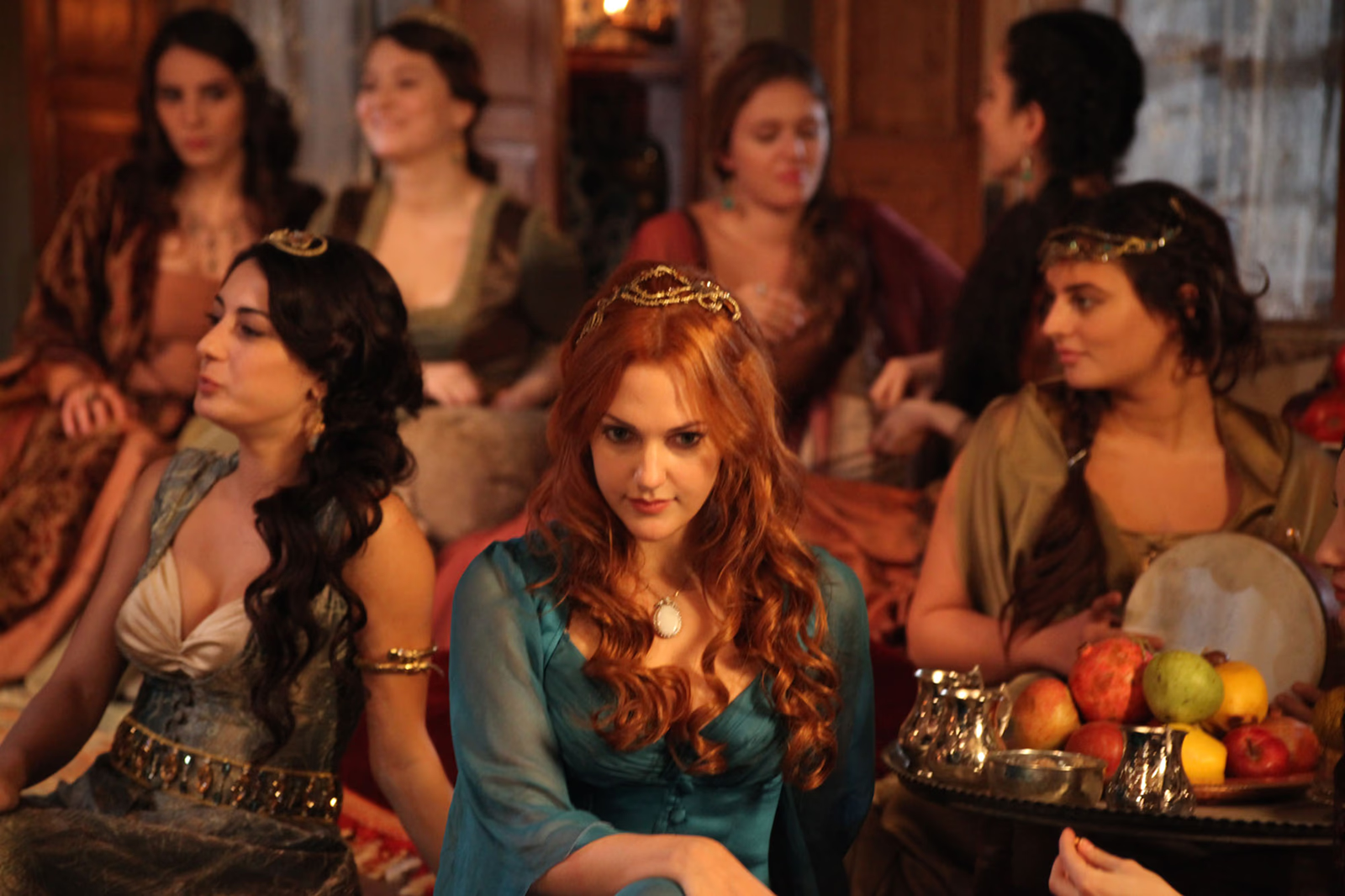
But the show is smart enough to know that you can’t hold a global audience with battle maps and treaty negotiations. So while the wars happen, the real story unfolds inside the Topkapi Palace — specifically inside the Harem, where the women and children of the Sultan’s household navigated a world just as dangerous and politically charged as any battlefield.
The heart of that story is Hürrem Sultan. Born Alexandra, a young woman captured from what is now modern-day Ukraine, she arrived at the palace as a slave with no name, no status, and no apparent future. Over the course of the series, she becomes the legal wife of the Sultan — something no Ottoman concubine had achieved in centuries — and one of the most powerful political figures of her age. Her real-life story is extraordinary. The show’s version of it is riveting television.
Why does it work so well?
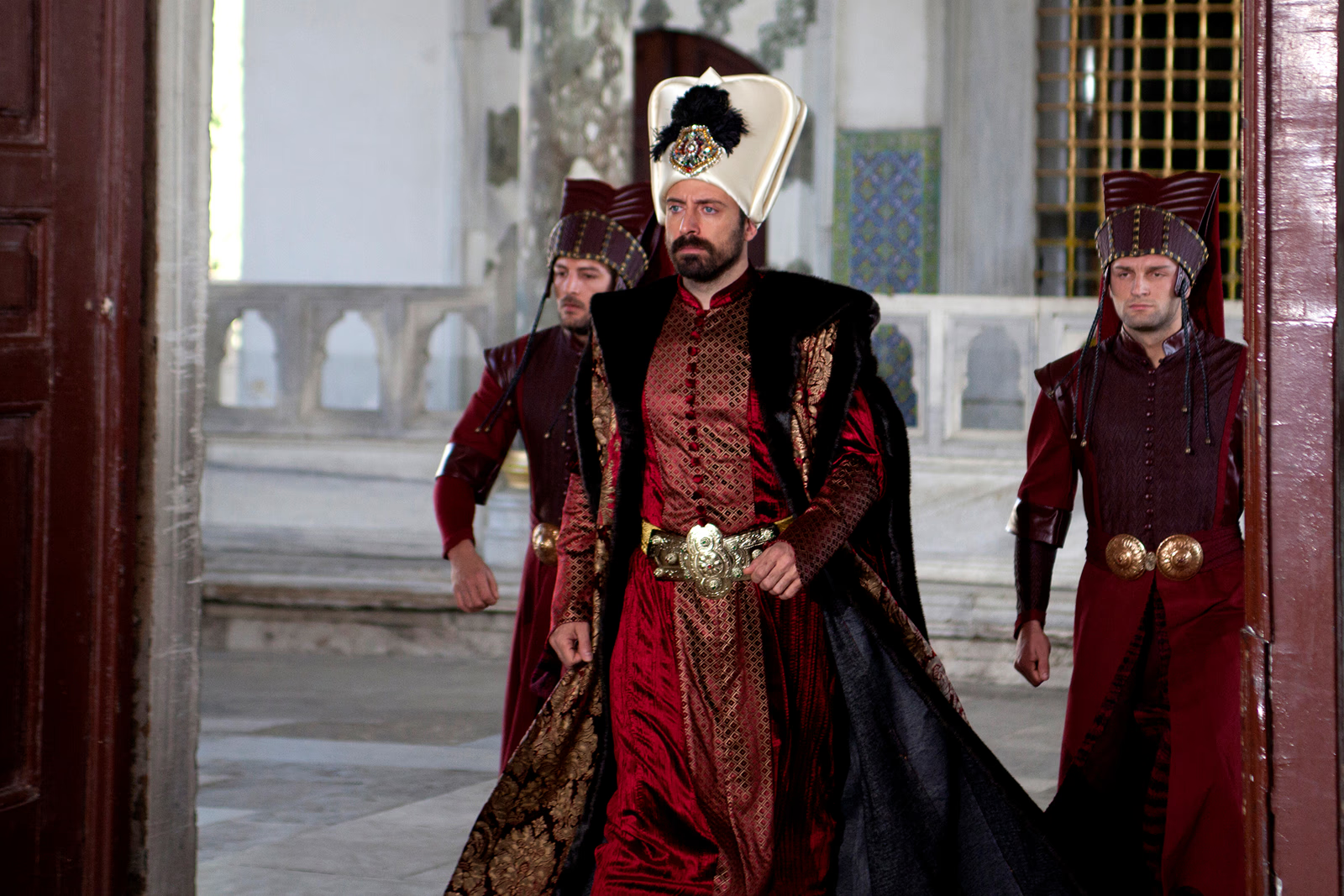
Historical dramas can be stiff. They get bogged down in dates, costumes become the point, and the characters feel like museum exhibits. Magnificent Century sidesteps all of this by treating its historical figures as human beings with recognizable emotions. Suleiman doesn’t just make a military decision — he makes it because he’s grieving, or jealous, or betrayed. Hürrem doesn’t scheme in a vacuum — she schemes because she’s terrified, or in love, or both.
The show’s central relationships carry the weight of the drama. The friendship between Suleiman and his Grand Vizier Ibrahim Pasha is genuinely moving — two men who rose together from nothing, slowly pulled apart by power and resentment. The rivalry between Hürrem and Mahidevran Sultan, the mother of the Sultan’s eldest son, is the kind of sustained dramatic tension that makes you watch three episodes in a row and then lie awake thinking about it.
Worth knowing
When Şehzade Mustafa — the beloved crown prince — met his historically documented fate in Season 3, fans across the Middle East and Balkans reportedly held unofficial periods of mourning. Some TV channels cut to news coverage of viewer reactions.
Then there’s the visual world the show builds. The production invested heavily in period-accurate detail: the jewelry alone ran to over 5,000 individually designed pieces. The costumes were hand-sewn. The music, composed by Fahir Atakoğlu and Aytekin Ataş, weaves traditional Ottoman instruments into something that feels timeless rather than dated. After the first season aired, “Hürrem Red” became the most requested hair color at salons across Turkey. Ottoman-style emerald rings started appearing in boutiques from Buenos Aires to Beirut.
The cast
The show’s longevity owes a great deal to performances that could easily have gone wrong. Playing a historical icon is a trap — too reverent and the character becomes a statue; too loose and you lose the period. The main cast walks that line consistently well.
Halit Ergenç (Sultan Suleiman)
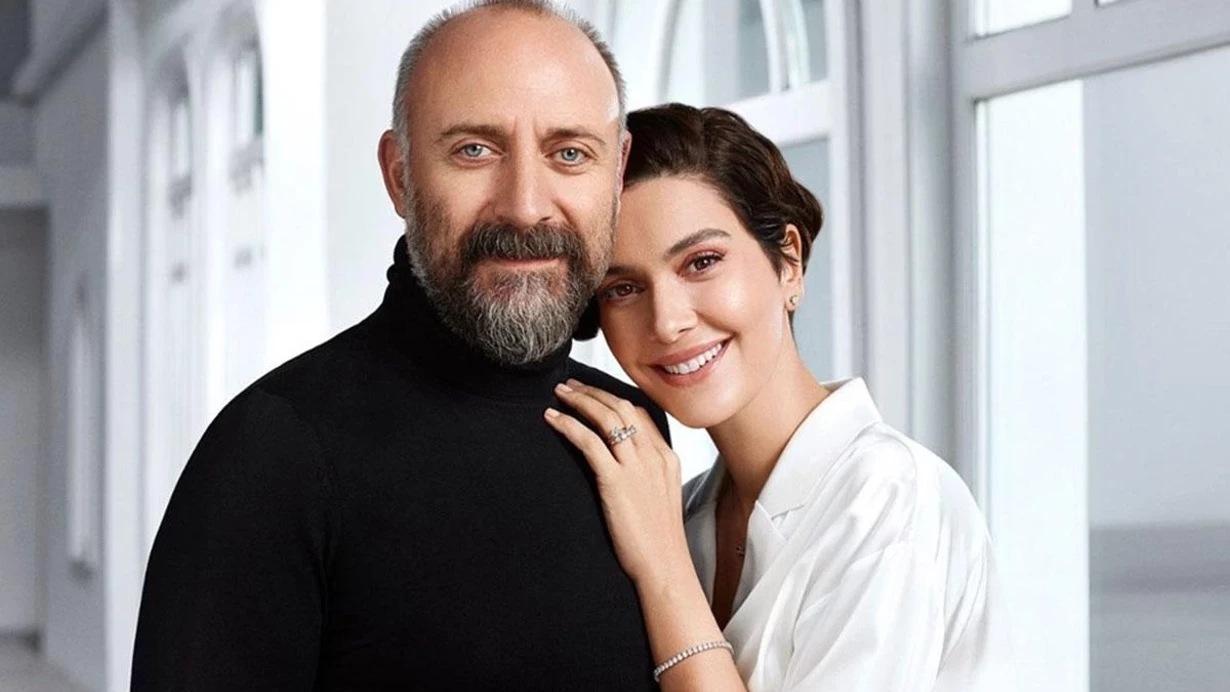
Few actors have the range to play a figure this large without tipping into caricature. Ergenç pulls it off because he approaches Suleiman from the inside out — not as a legend, but as a man carrying the weight of an empire. His formal training at Mimar Sinan Fine Arts University, where he studied opera and musical theatre, gives him an unusual physicality and vocal command on screen. What he does with a pause, or a glance, tells you more than most actors can manage in a full scene.
His background is anything but conventional: he started out studying marine engineering at Istanbul Technical University, then changed course entirely. Before television, he spent years on stage at the Dormen Theatre, including the lead role in The King and I.
He established himself on TV through Kara Melek and the hit series Binbir Gece (2006–2009), (which is also very famous) where he played opposite his future wife Bergüzar Korel. His career has continued well beyond Magnificent Century — notable credits include Vatanım Sensin (2016–2018) and the film Ali and Nino. In 2017, he was awarded the International Icon of the Year at Pakistan’s Lux Style Awards, a measure of how far this role carried him.
Notable works: Binbir Gece (2006), Vatanım Sensin (2016), Dersimiz Atatürk (2010), Babam ve Oğlum (2005)
Instagram: @halitergencofficial
Meryem Uzerli (Hürrem Sultan)
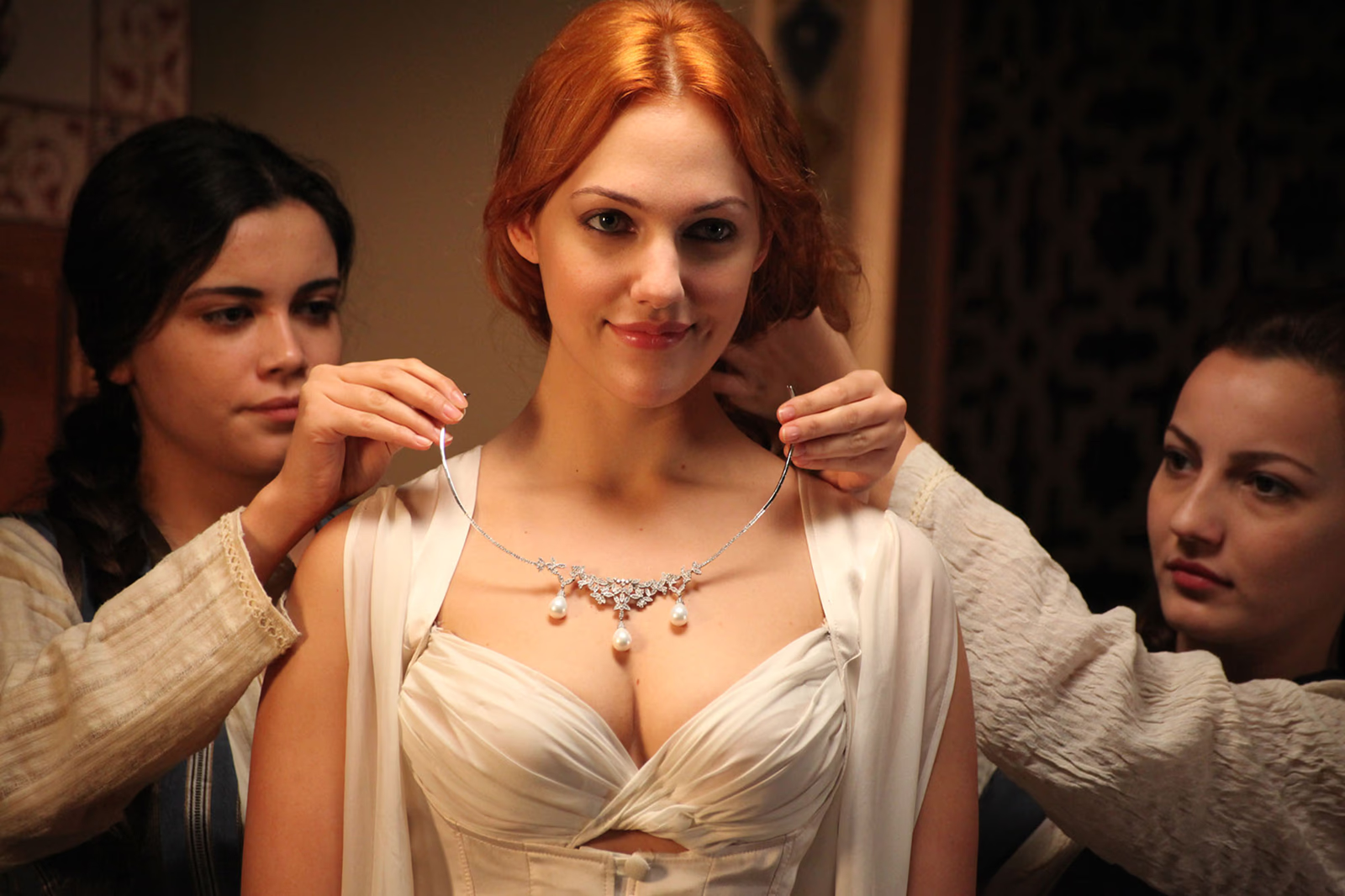
The casting of Meryem Uzerli is one of those decisions that looks obvious in retrospect. At the time, she was barely known — a German-Turkish actress with a handful of minor credits in Germany, selected after an eight-month search by the show’s screenwriter. She moved to Istanbul, lived in a hotel for two years during filming, and delivered one of the most talked-about performances in Turkish television history.
Uzerli grew up in Kassel, Germany, and enrolled at Hamburg’s Schauspiel Studio Frese at just 17 — the youngest student the school had admitted. Her native language is German; she learned Turkish for the role. The combination of an outsider’s perspective and genuine commitment to the character made her Hürrem feel both alien to the Ottoman world and completely at home in it. She left the series in 2013 due to burnout, and her exit was noticeable. Her more recent work includes the series RU (2024, renewed for a second season) on Turkey’s Gain platform, where she continues to take on complex leading roles.
Notable works: Journey of No Return (2010), Gecenin Kraliçesi (2016), Kovan (2019), RU (2024)
Instagram: @meryemuzerlimeryem
Okan Yalabık (Ibrahim Pasha)
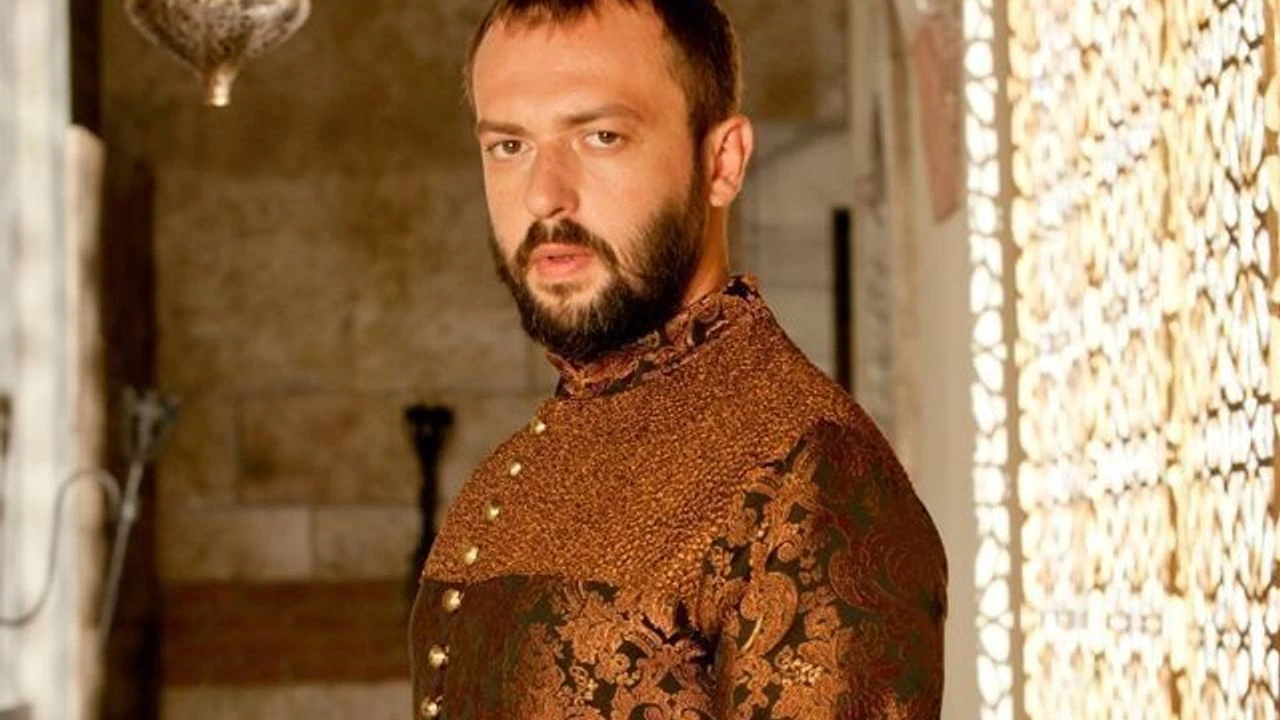
Ibrahim Pasha is the kind of role that could easily become a villain — a man whose ego ultimately destroys the most important friendship of his life. Yalabık refuses to take that easy route. He plays Ibrahim with so much intelligence and contradictory warmth that when the inevitable comes, it lands as tragedy rather than justice. His 82 episodes are among the most compelling in the entire run of the series.
Yalabık’s theatrical roots run deep. He trained at Istanbul University State Conservatory, later earning a master’s in Film and Drama at Kadir Has University. He’s also a working musician — he plays drums at an advanced level and has recorded original albums. The range isn’t just biographical colour; it shows up in the texture of his performances. Among his other notable work is a lead role in Netflix’s The Protector, and the medical drama Hekimoğlu, in which he appeared for 51 episodes. He also voiced Kung Fu Panda’s Po in the Turkish dubs of both films.
Notable works: Hatırla Sevgili (2006), Av Mevsimi (2010), The Protector / Netflix (2018), Hekimoğlu (2019–2020)
Instagram: @okanyalabikreal
Nur Fettahoğlu (Mahidevran Sultan)
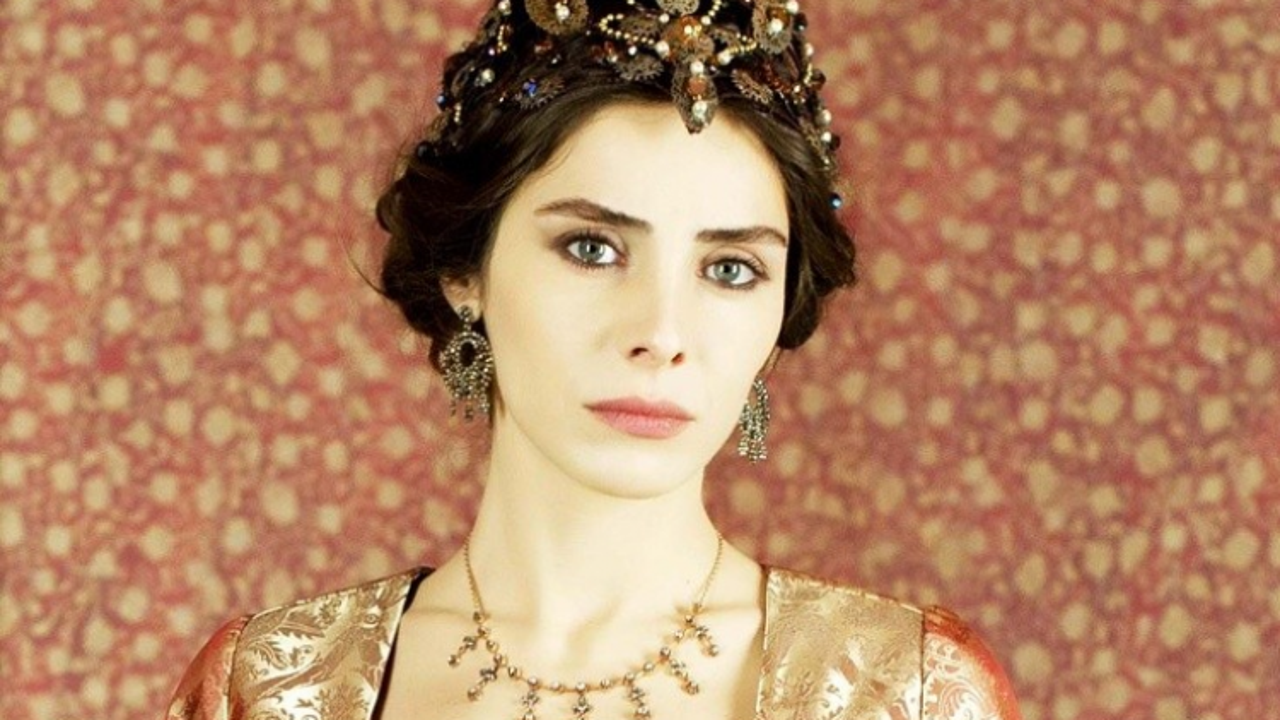
Nur Fettahoğlu has what might be the hardest job in the cast: playing the woman the audience is supposed to root against, while making sure they never quite can. Mahidevran is written as the obstacle to Hürrem’s rise, but Fettahoğlu plays her as a woman trying to hold her world together by any means available. It’s a performance built on dignity rather than scheming, and it earned her a devoted following that rivalled Hürrem’s own fan base.
Her path to acting was genuinely unexpected. She graduated with a degree in fashion design from Haliç University, then worked in banking, then became a financial news anchor for Sky Türk — before her husband at the time encouraged her to try acting. Her first major role came in Aşk-ı Memnu (Forbidden Love), where she made an impression playing a very different kind of rival. Magnificent Century, particularly the historical epic Payitaht Abdülhamid, cemented her status as one of Turkey’s leading period drama actresses.
Notable works: Aşk-ı Memnu (2008), Kurtlar Vadisi Filistin (2011), Payitaht Abdülhamid (2017)
Instagram: @eautfettahoglu
Mehmet Günsür (Prince Mustafa)
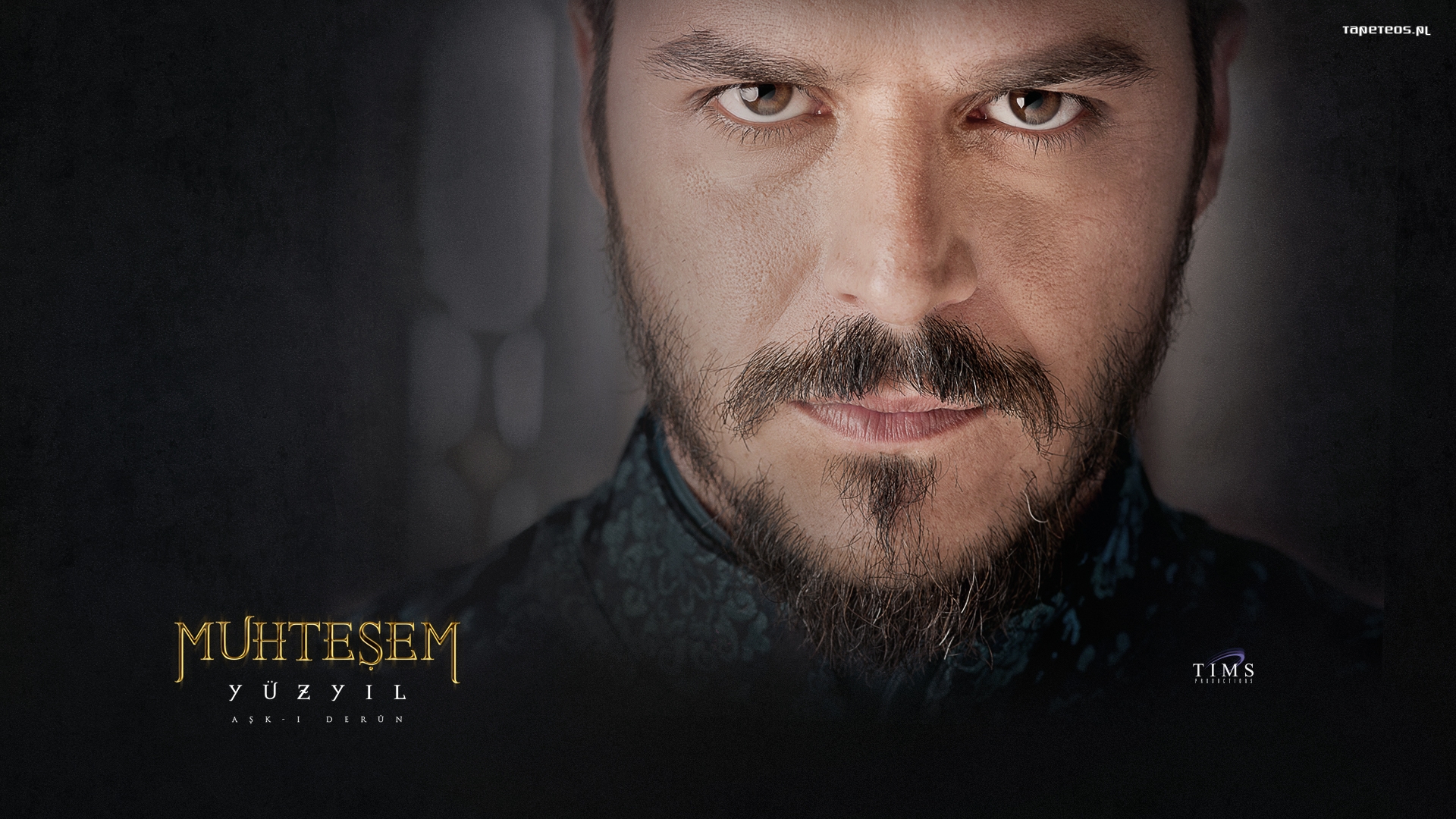
The role of Mustafa is a gift and a trap at the same time. A perfect prince — brave, principled, loved by the army, loyal to a father who is slowly being turned against him — is easy to make dull. Günsür avoids this by finding the places where Mustafa doubts himself, and making those moments the engine of the character. When his storyline reaches its historical conclusion, it’s one of the most affecting sequences the show produces.
Günsür is one of the most internationally experienced actors in Turkish cinema. He began acting in commercials at age seven, studied communications at Marmara University (Italian High School first — he speaks fluent Italian), and built a parallel career in Italy that began with his breakthrough role in Ferzan Özpetek’s film Hamam (1997), which won him the Most Promising Actor award at the Ankara Film Festival. He has since appeared in Italian productions, American television, and — more recently — on Netflix’s The Gift (Atiye). His career has shown no signs of slowing: he appeared in Atatürk 1881-1919 (2023) and continues to take on demanding leading roles.
Notable works: Hamam / Steam: The Turkish Bath (1997), Aşk Tesadüfleri Sever (2011), The Gift / Atiye — Netflix (2019), Atatürk 1881-1919 (2023)
Instagram: @mehmet.gunsur
Should you visit Istanbul after watching it?
Almost certainly yes — and you’ll see the city differently if you do. The show was filmed on purpose-built sets, but the real locations are all accessible and, in some cases, even more impressive than the recreations. Don’t forget to check out our guide to locations featured in famous Turkish TV series.
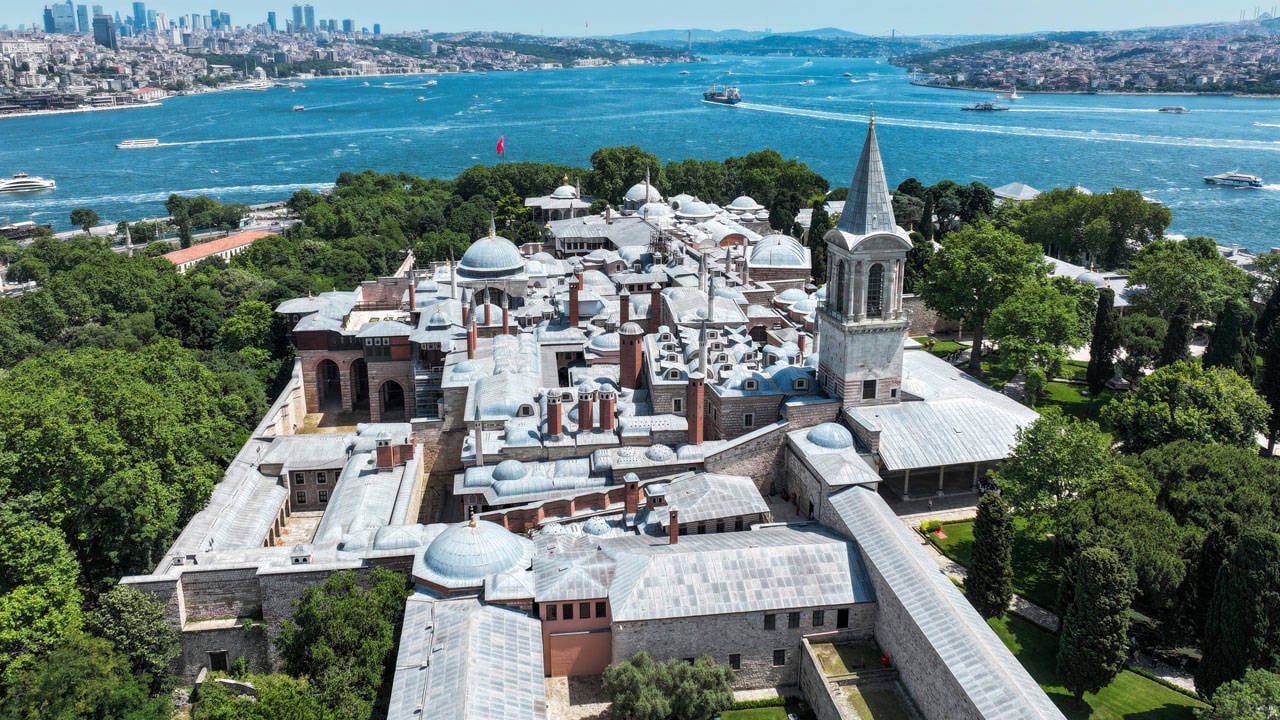
Topkapi Palace is the obvious starting point. The actual Harem quarters are open to visitors and far more labyrinthine than the show suggests — a maze of tiled corridors, courtyard gardens, and interconnected apartments that housed hundreds of people for centuries. The real jewels and kaftans worn by historical figures from the show’s era are on display in the palace treasury.
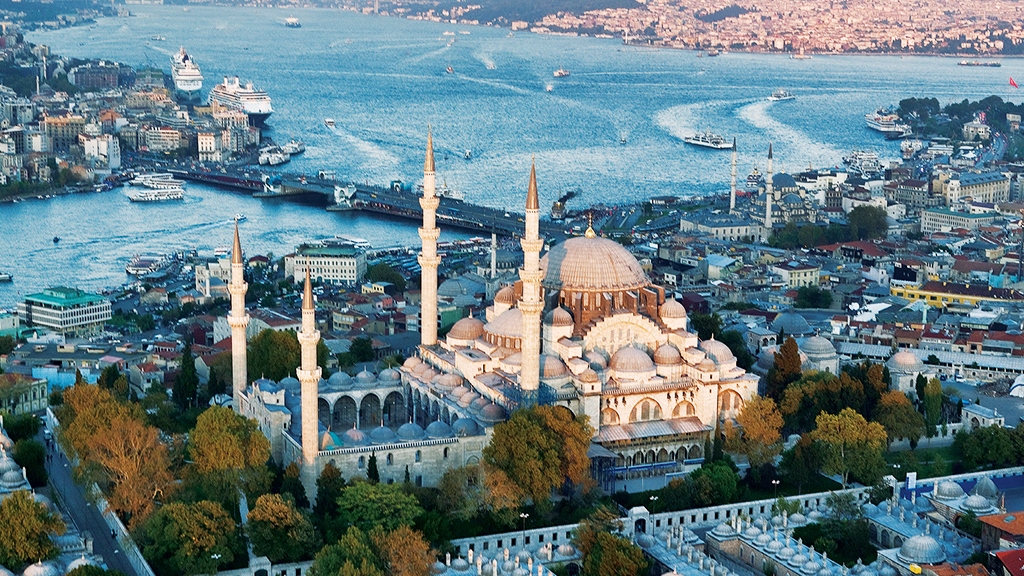
The Süleymaniye Mosque, built by the great architect Sinan at Suleiman’s request, sits on one of Istanbul’s hills overlooking the Golden Horn. In its garden, Suleiman and Hürrem are buried in adjacent tombs — together still, 500 years later.
If you want to take something home, the Grand Bazaar has no shortage of Ottoman-inspired jewelry and textiles. Just take your time — the good stuff is rarely at the front of the shop.

Where to watch
Magnificent Century is available with English subtitles on Netflix in several regions, and on YouTube via the official Tims & B Productions channel. (Also producer’s website: Tims & B Productions)The subtitle quality varies — if you find a version where you can choose between subtitle tracks, the fan-translated versions are sometimes more accurate to the nuances of the Ottoman Turkish dialogue.
Start with the first three seasons. Season four introduces a new generation of characters and divides fans. Give the show three or four episodes before deciding — the pace is deliberate at first, and then suddenly you’ll realize it’s 2am and you have no intention of stopping. Also, don’t forget to check out our article explaining why Turkish TV series are popular.
Bonus: The famous intro music of Magnificent Century;
Frequently Asked Questions
Everything you want to know before — or after — you start watching.
Was Hürrem Sultan a real historical figure?
Yes — and her real story is arguably more remarkable than the show’s version. Hürrem Sultan (c. 1505–1558), also known as Roxelana, was the chief consort and legal wife of Sultan Suleiman the Magnificent, the mother of his successor Selim II, and the first Haseki Sultan of the Ottoman Empire. Presumably born in Ruthenia — present-day Ukraine — she was captured by Crimean Tatars during a slave raid and eventually brought to Constantinople, where she entered the imperial harem and rose to become Suleiman’s favourite concubine.
Breaking Ottoman tradition, Suleiman freed and then married her — making her his legal wife — something no Ottoman concubine had achieved before. Her name Hürrem means “joyful” or “the laughing one” in Persian. The letters exchanged between Suleiman and Hürrem that survive to this day confirm theirs was a genuine love match, not merely a political arrangement.
How historically accurate is Magnificent Century?
The broad strokes of history are largely intact — the key figures are real, the major events happen, and the political dynamics of the Ottoman court are grounded in fact. The show’s writers have been transparent that they took dramatic licence with personal relationships, dialogue, and the inner lives of its characters, which is standard for historical fiction.
Some specific details don’t hold up to scrutiny: in one episode, Sultan Suleiman recites a verse that was actually written in 1870 — nearly 400 years after his reign — and a kitchen scene shows a cook dicing tomatoes, even though tomatoes didn’t enter Ottoman cuisine until after 1835. These are minor anachronisms, but they illustrate the gap between drama and documentary. The show’s focus on the Harem rather than military campaigns was also a deliberate creative choice that generated significant controversy in Turkey. That said, historians noted a positive side effect: when the series aired, books about Sultan Suleiman sold out, and many works about his life and reign were translated into new languages for the first time.
How many seasons and episodes does the show have?
Magnificent Century ran for four seasons, originally broadcast on Show TV before transferring to Star TV. The total episode count across all four seasons is 139 — each episode runs approximately 120 to 150 minutes, which is considerably longer than a standard Western drama episode. In total, you’re looking at roughly 270–300 hours of television. Seasons one through three follow Sultan Suleiman and the main cast through their most dramatic decades. Season four shifts to a new generation and receives mixed reviews; most fans consider the first three seasons the essential viewing.
Where can I watch Magnificent Century with English subtitles?
The most accessible options are Netflix (available in selected regions) and the official YouTube channel run by Tims & B Productions, which has uploaded a large portion of the series with English subtitles free of charge. Subtitle quality varies across platforms — viewers who want more nuanced translations of the Ottoman Turkish dialogue sometimes seek out fan-translated versions, which tend to handle the period-specific language more carefully. If you’re watching on YouTube and the subtitles feel stiff or awkward, it’s worth checking whether an alternative subtitle track is available.
Where should I start — and do I need to watch all four seasons?
Start at the beginning — the show rewards patience and the setup in the first season pays off significantly later. Give it three or four episodes before forming an opinion; the pace is deliberate early on and then tends to pull you in hard before you notice it happening.
As for Season 4: it is optional in the sense that it tells a largely separate story following new characters. Many viewers who loved the first three seasons find it a disappointing shift, while others appreciate the continuation of the dynasty’s story. A reasonable approach is to watch through Season 3 first and then decide whether you want more.
Why was the show controversial in Turkey?
The show generated tens of thousands of complaints from viewers who called it a “disrespectful” and “hedonistic” portrayal of the historical Sultan. Turkey’s Radio and Television Supreme Council (RTÜK) received over 70,000 complaints and warned the broadcaster to apologise for wrongly exposing “the privacy of a historical person.” Then-Prime Minister Erdoğan publicly condemned the series as an effort to show Turkish history “in a negative light.”
The central objection was that the show depicted Suleiman spending his time in the Harem rather than on campaign — prioritising private life over imperial achievement. There’s an irony here: the very focus that troubled Turkish conservatives is precisely what made the show a global phenomenon. Stories of palace politics, family loyalty, and personal survival translate across languages and cultures in a way that battlefield sequences rarely do.