 Discover all about Turkish People & Turkey! The most detailed information about Turkish Culture & Turkey, contents, topics of interest & much more…
The Ultimate Turkish Kebab Guide: 15+ Authentic Types & Secret Recipes
Turkish Kebab is far more than just “meat on a stick.” It is a culinary language spoken through fire, spices, and centuries of tradition. From the bustling streets of Istanbul to the sophisticated tables of Gaziantep, the kebab represents the heart of Turkish hospitality.
In this guide, we dive deep into the world of Turkish kebabs, exploring their nomadic origins, the regional varieties that define Turkish cuisine, and the secrets to achieving that authentic smoky flavor at home.
1. The Soul of the Flame: What Defines a True Turkish Kebab?
To understand the kebab, one must understand the Anatolian relationship with fire. Unlike Western BBQ, which often relies on heavy sauces, the Turkish kebab focuses on meat quality and precise marination.
The Anatomy of Taste:
The Meat: Traditionally, lamb is the star. In Turkey, “Kıvırcık” sheep from the Thrace region are prized for their mild, buttery fat. Modern variations often use a blend of lamb and veal to balance flavor and texture.
The Fat: “Kuyruk Yağı” (Tail fat) is the secret ingredient. It has a lower melting point than muscle fat, providing a unique silkiness and preventing the meat from drying out over high heat.
The Heat: Authentic kebabs are cooked over Oak Charcoal (Meşe Kömürü). The wood imparts a subtle, sweet smokiness that gas grills simply cannot replicate.
2. Regional Legends: The Kebab Map of Turkey
Turkey’s geography dictates its flavors. The Southeast is the “Kebab Belt,” where spices are bolder and techniques are more rigorous.
Adana Kebab: The Spicy Masterpiece
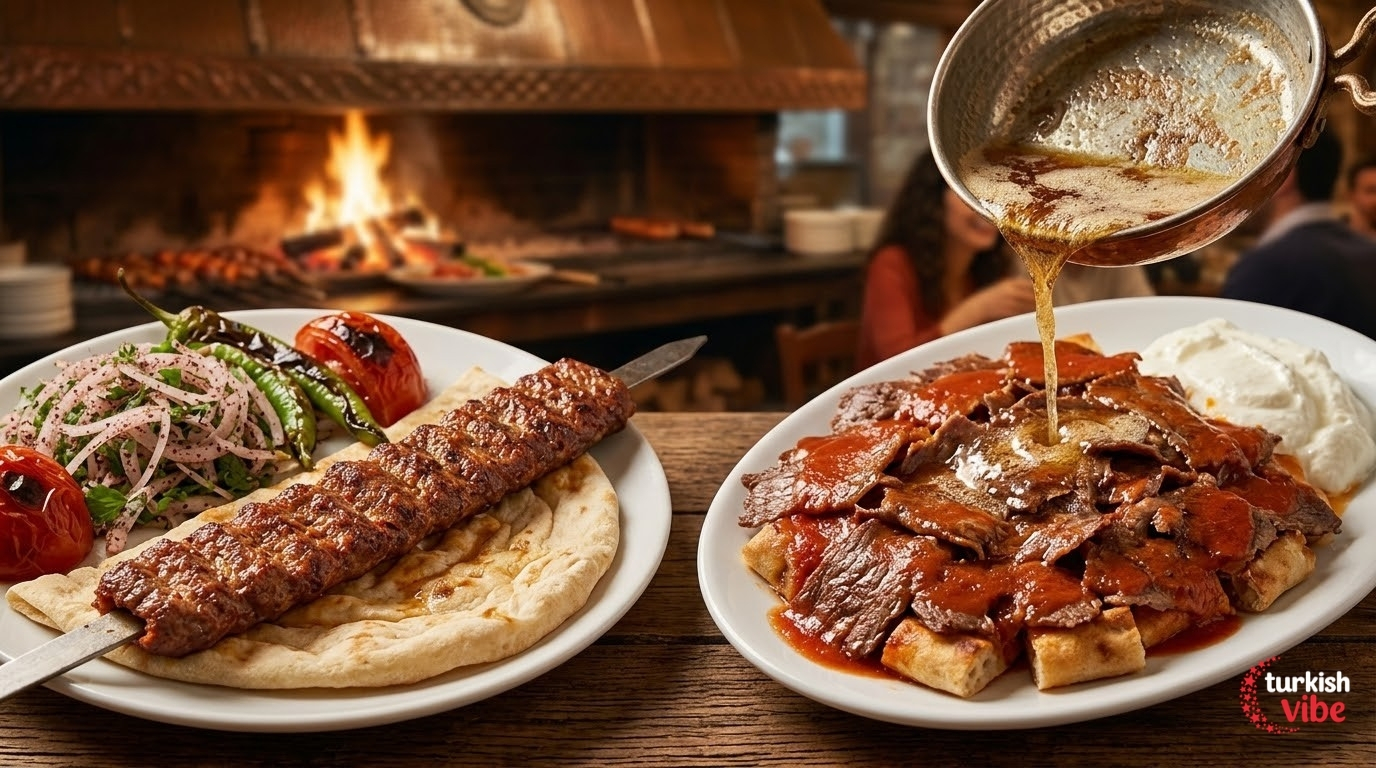
Hailing from the city of Adana, this is perhaps the most famous kebab. It is made from hand-minced meat (using a curved blade called a Zırh) mixed with red bell peppers and tail fat.
The Rule: A true Adana Kebab must be “hand-chopped.” Machine-ground meat loses the juice-retaining pockets that make Adana so succulent.
Urfa Kebab: The Mild Cousin
Similar to Adana in preparation but omitting the spicy pepper flakes. It highlights the natural sweetness of the lamb and is perfect for those who prefer a milder palate.
İskender Kebab: The Emperor of Flavors (Which is my favorite!)
Born in Bursa in the late 19th century, this dish consists of thinly sliced Döner meat laid over pieces of warm pide bread, drenched in hot tomato sauce, and finished with a dramatic pour of sizzling browned butter at the table.
Cağ Kebabı: The Horizontal Ancestor
Before the Döner went vertical, it was horizontal. This Erzurum specialty features marinated lamb sliced into discs and stacked on a horizontal spit. It is served on small skewers (cağ) and is known for its intense, concentrated flavor.
3. Beyond the Skewer: Exploring Varieties
While Shish (cubed meat) is world-famous, the Turkish repertoire includes ingenious combinations of meat and vegetables:
| Kebab Type | Primary Ingredients | Cooking Style |
| Patlıcan Kebabı | Eggplant & Meatballs | Alternating layers on a skewer |
| Beyti Sarma | Ground meat wrapped in Lavaş | Grilled, sliced, and topped with yogurt |
| Çöp Şiş | Small lamb scraps & fat | Fast-grilled on thin wooden skewers |
| Ali Nazik | Smoked Eggplant puree & Lamb | Sautéed meat over a yogurt-eggplant base |
4. The Art of the Marinade (Terbiye)
If you want to recreate these flavors, the “Terbiye” (marinade) is your foundation. For Shish Kebab, a 24-hour soak is mandatory.
The “Turkish Vibe” Signature Marinade:
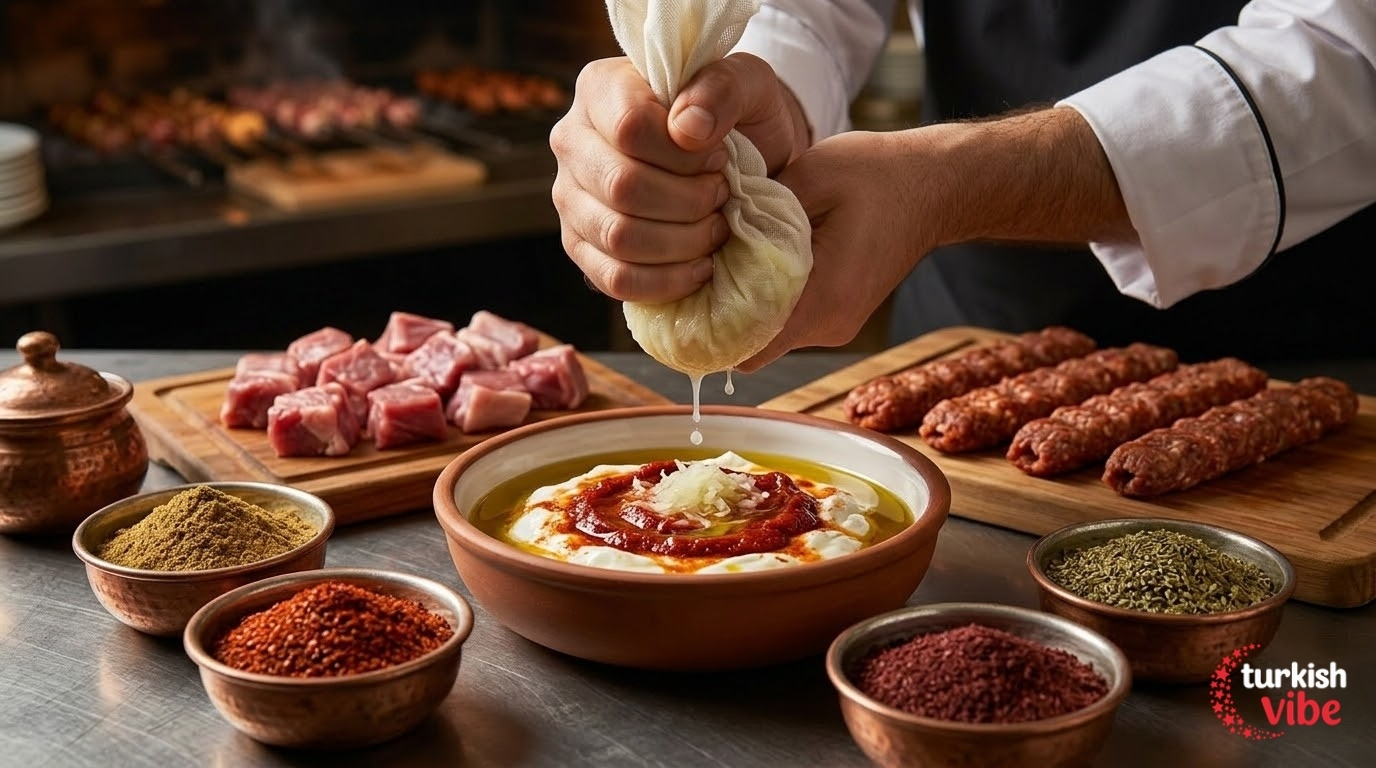
Onion Juice: Grate an onion and squeeze the juice through a cloth. Use only the juice; the pulp will burn and turn bitter.
Yogurt: Acts as a natural tenderizer thanks to lactic acid.
Tomato Paste (Salça): Adds color and a deep umami base.
Spices: Cumin, Aleppo pepper (Pul Biber), and dried oregano (Kekik).
5. The “Side Kick” Culture: What to Serve with Kebab
A kebab never travels alone. To eat like a local, your table must feature these essentials:
Sumac Onion Salad (Piyaz): Thinly sliced red onions rubbed with sumac and parsley. The acidity of the sumac cuts through the richness of the meat.
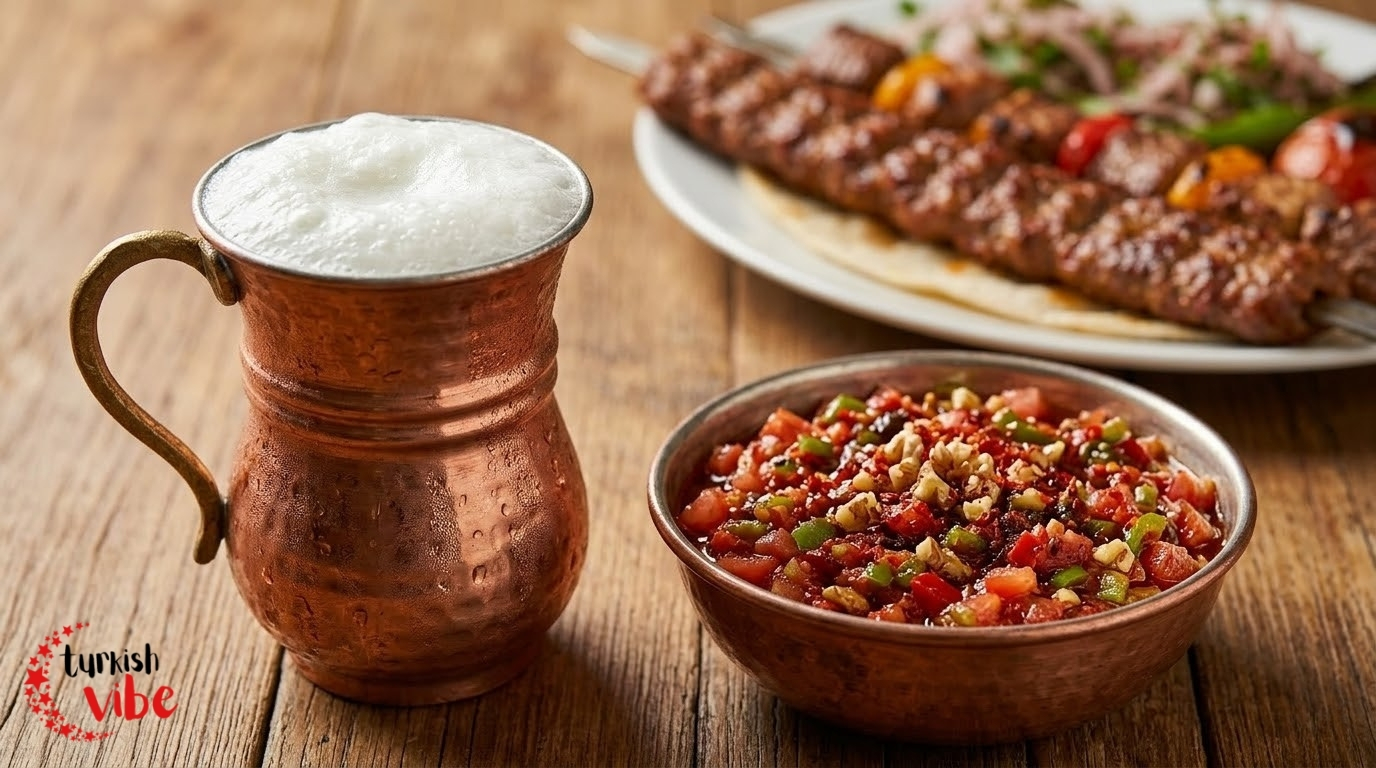
Ezme: A spicy, finely chopped salad of tomatoes, peppers, pomegranate molasses, and walnuts.
Roasted Peppers and Tomatoes: Always grilled alongside the meat on the same fire.
Ayran: The ultimate companion. This cold, salty yogurt drink is the perfect palate cleanser.
6. Global Trend: Why is “Turkish Kebab” Exploding in 2026?
The recent surge in Google searches for “Turkish Kebab” isn’t accidental. Several factors are driving this:
Healthy Fast Food: Unlike processed burgers, kebabs offer high-protein, grilled-to-order meals often served with fresh vegetables.
The “Home Chef” Movement: With the rise of high-quality home grills, foodies are looking to master the art of the Zırh (hand-mincing) at home.
Authenticity over Fusion: In 2026, diners are moving away from “generic Mediterranean” and seeking specific, regional Turkish identities (like the distinction between Gaziantep and Hatay styles).
7. Pro Tips for the Perfect Home Kebab
Don’t over-marinate chicken: While lamb needs 24 hours, chicken becomes mushy after 6-8 hours.
Salt late: Add salt to your ground meat kebabs just before shaping to keep the protein structure intact.
The Bread Secret: Lay your pita or lavaş over the cooking meat for the last 60 seconds. It will soak up the aromatic steam and fat, becoming a delicacy in its own right.
The Foundation: Authentic Turkish Shish Kebab Recipe
To live the “Turkish Vibe” at home, start with this foundational lamb shish recipe. This marinade is the “secret” used by top grill masters in Istanbul.
Ingredients:
- 1 kg (2 lbs) lamb shoulder or leg, cut into 1-inch cubes
- 100g (4 oz) lamb tail fat (optional, for authentic flavor)
- 2 tbsp thick Turkish yogurt
- 1 tbsp tomato paste (Salça)
- 4 cloves of garlic, crushed
- 1/2 cup onion juice (strained)
- 1/4 cup olive oil
- Spices: 1 tsp Cumin, 1 tsp Pul Biber (Aleppo pepper), 1 tsp dried Oregano, Salt and Pepper.
Instructions:
- The Marinade: Whisk yogurt, tomato paste, garlic, onion juice, oil, and spices in a large bowl.
- The Soak: Add the meat cubes. Massage the marinade into the meat. Cover and refrigerate for at least 12 hours (24 hours is best).
- Threading: Skewer the meat, alternating 3-4 pieces of meat with 1 small piece of tail fat.
- The Fire: Grill over medium-high heat (ideally charcoal) for 8-10 minutes, turning frequently.
- The Finish: Rest the meat for 2 minutes on a piece of warm lavaş before serving.
8. Bonus: More Regional Stars to Explore
To truly master the “Turkish Vibe,” you should also know these regional specialties:
Tepsi Kebabı: A Hatay specialty where minced meat is pressed into a tray and baked with spices.
Kağıt Kebabı: Meat and vegetables cooked inside special parchment paper to trap all the juices.
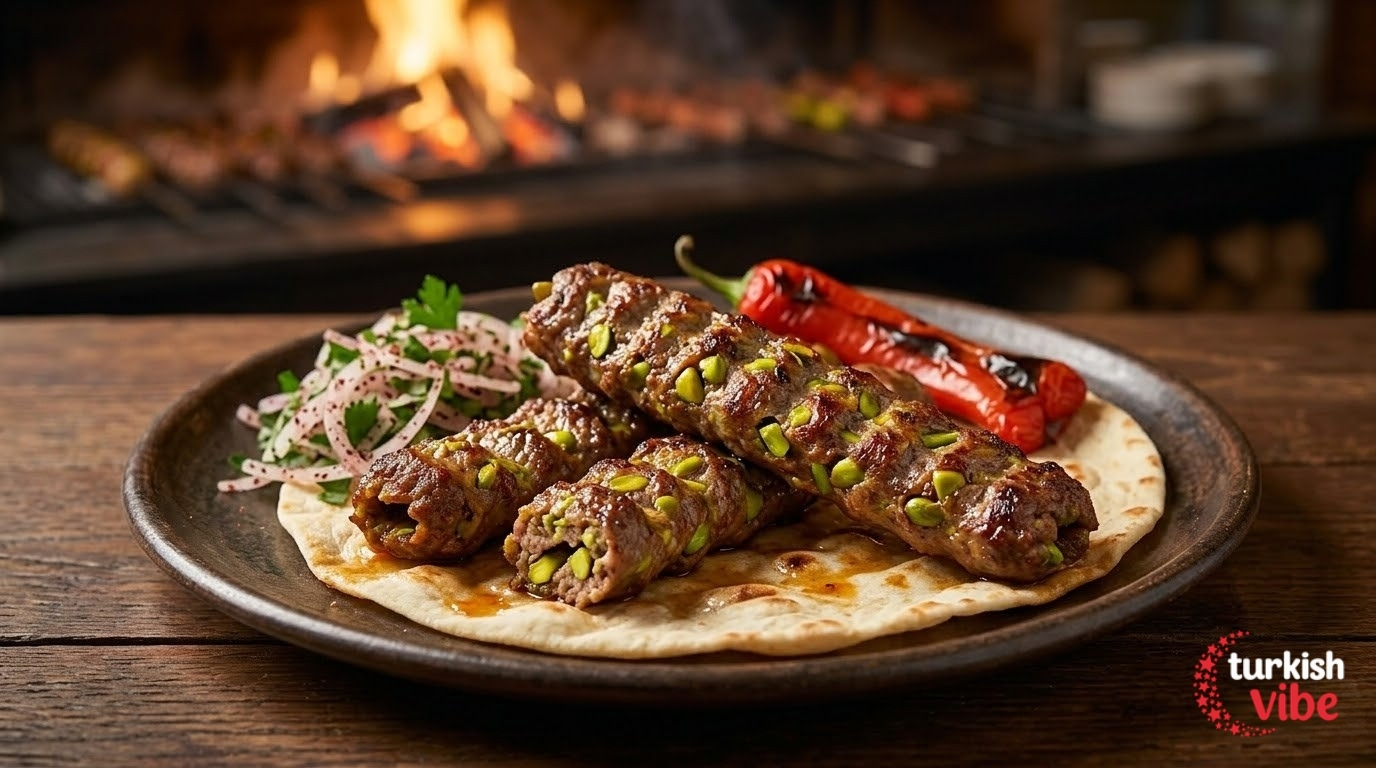
Fıstıklı Kebab: A gourmet version of the minced kebab featuring crushed Antep pistachios.
Manisa Kebabı: Small, tire-shaped kebabs served over pita bread with a special tomato butter.
Tandır Kebabı: Slow-roasted lamb cooked in a traditional pit oven until it falls off the bone.
Soğan Kebabı: A winter favorite where small onions are stuffed with meat and roasted with pomegranate molasses.
Orman Kebabı: A “forest” style kebab that is more of a rich meat stew with seasonal vegetables.
Conclusion: Join the Turkish Vibe
The Turkish kebab is a testament to the idea that simple ingredients, when treated with respect and tradition, can create a world-class experience. Whether you are visiting a “Ocakbaşı” in Istanbul or firing up the grill in your backyard, you are participating in a ritual that has fed empires.
Stay tuned to turkishvibe.com for more deep dives into the spices, stories, and secret spots of Turkey. Also check: The Best Turkish Street Foods You Must Taste in Turkey!