 Discover all about Turkish People & Turkey! The most detailed information about Turkish Culture & Turkey, contents, topics of interest & much more…
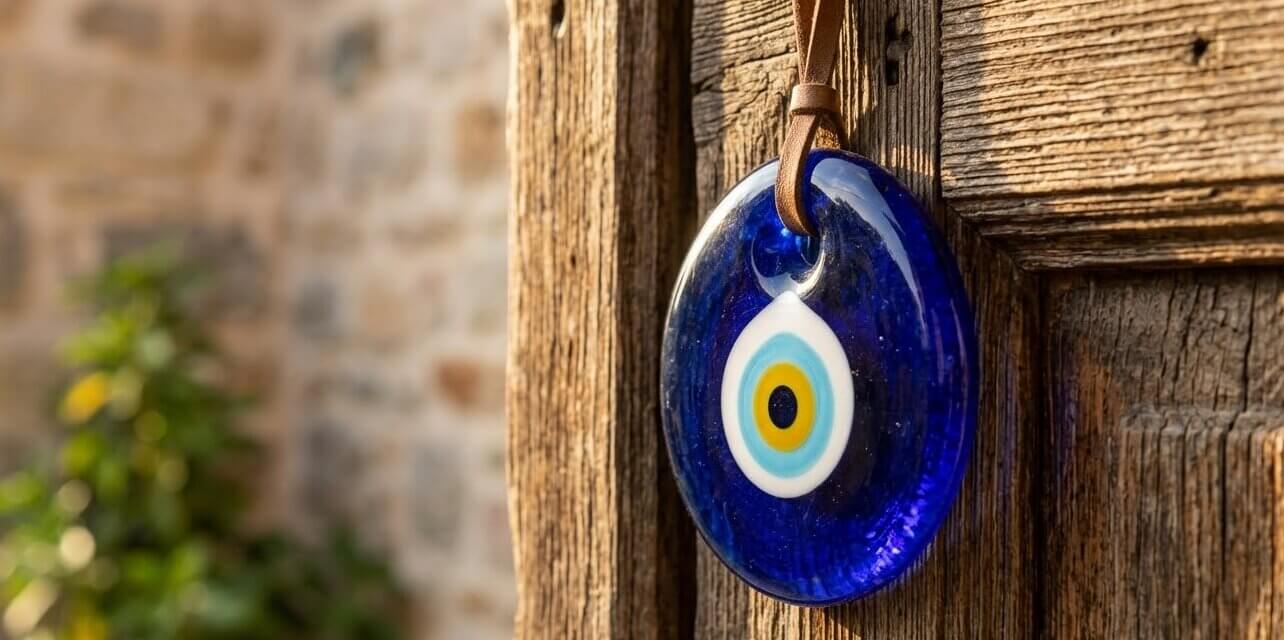
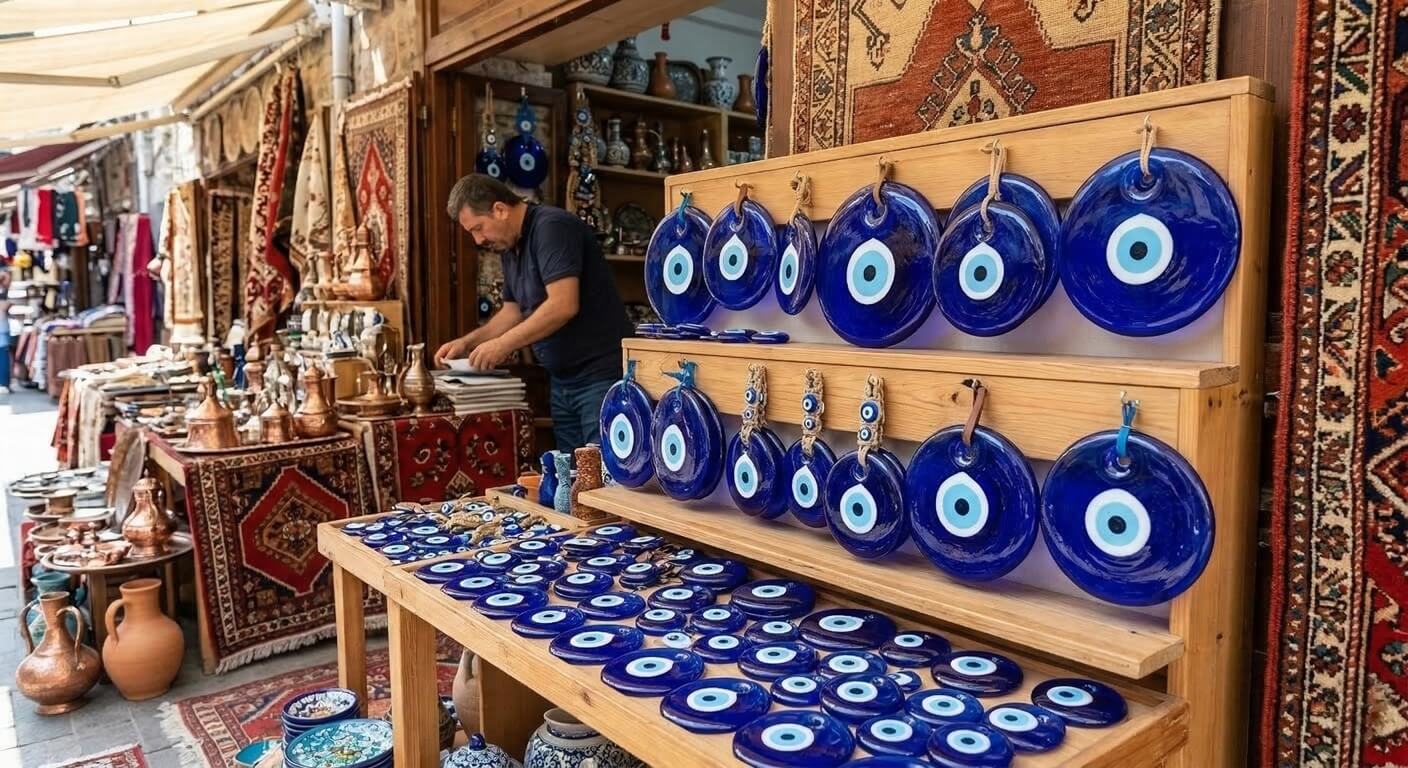
“Have you ever noticed a bright blue, eye-like bead staring back at you in a Turkish bazaar, or perhaps hanging above the doorway of a local home? This is the Evil Eye ‘Nazar Boncugu’—one of the most iconic symbols of Turkey. But for Turks, it is much more than a pretty souvenir; it is a centuries-old shield against one of humanity’s oldest fears.”
What Exactly is ‘Nazar’? (The Power of the Envious Glare)
At the heart of this blue bead lies an ancient belief: Nazar. In Turkish culture, Nazar refers to the “Evil Eye”—a malevolent glare cast by someone, often fueled by envy or even excessive admiration. It is believed that this glance carries a negative energy that can cause bad luck, illness, or even physical damage to a person or an object.
The most interesting part? It’s not always cast with bad intentions. A friend praising your new car or a stranger admiring a beautiful baby can accidentally “touch” them with Nazar. This is why, in Turkey, you will often hear the phrase “Masallah” after a compliment, which acts as a verbal shield to ward off the unintended negative effects of a gaze.
The Anatomy of a Nazar Boncugu: Why Blue and Why an Eye?
The Nazar Boncugu (the Evil Eye Bead) is designed to be a literal “distraction.” The logic is simple: the bead acts as a lightning rod. When someone looks at you, their gaze is immediately drawn to the bright, contrasting colors of the bead instead of you. By “catching” the eye of the beholder, the bead absorbs the negative energy, protecting the wearer.
But why is it almost always blue?
The Power of Blue: Historically, in many Mediterranean and Central Asian cultures, blue was a rare and precious color. It was believed to represent the sky and divinity.
The Blue-Eyed Stranger: Ancient folklore suggests that people with light blue eyes—who were rare in the early days of these regions—were more likely to cast the evil eye, even unintentionally. To counter this, a blue eye was created as a mirror to reflect that power back.
The Material: Authentic Turkish Nazar beads are made of hand-blown glass, utilizing high-heat furnaces and lead-based pigments. This traditional craftsmanship ensures that no two beads are exactly alike, giving each one a “soul.”
How to Use It: Traditions and Superstitions
In Turkey, the use of the Nazar Boncugu is woven into the fabric of daily life. It is the ultimate “safety first” symbol for any new beginning.
Newborns: It is almost mandatory to pin a small gold-trimmed Nazar bead to a newborn baby’s clothing to protect their pure energy.
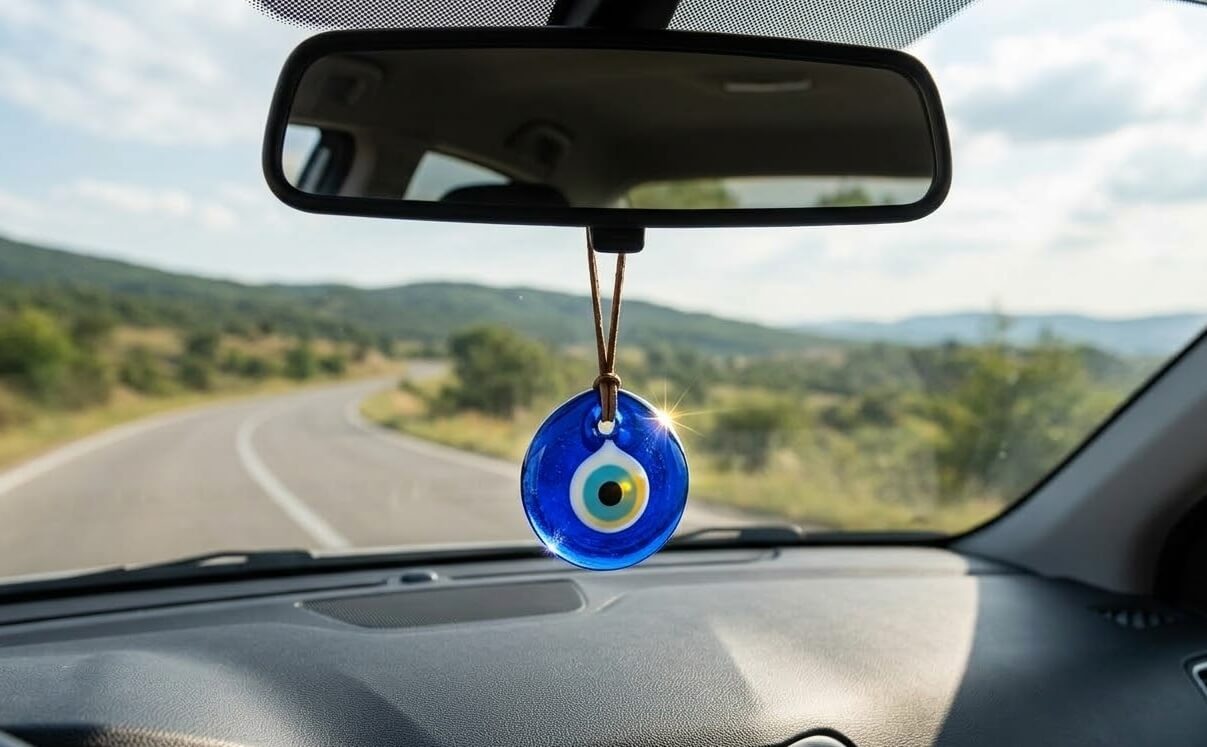
New Assets: Whether you’ve just bought a new home or a brand-new car, the first thing you do is hang a bead. It’s common to see them dangling from rearview mirrors or embedded into the entrance of modern apartments.
Fashion and Decor: Beyond its spiritual purpose, it has become a staple of Turkish aesthetics, appearing in jewelry, carpets, and even modern art.
What to Do if Your Evil Eye Bead Breaks?
One of the most common questions from visitors is: “My Nazar bead just shattered! Is this a sign of bad luck?”
In Turkish culture, the answer is a resounding “No!” In fact, it is quite the opposite. When a Nazar Boncugu cracks or breaks, it is believed that the bead has successfully fulfilled its duty. It means the bead absorbed a massive amount of “Nazar” (negative energy) that was directed at you. By breaking, it sacrificed itself to protect you.
If yours breaks, the tradition is simple:
Be grateful: Thank the bead for taking the “hit.”
Dispose of it: It has done its job and is now full of negative energy.
Replace it: Immediately get a new one to ensure your “shield” is back up.
The Ancient Roots: From Shamanism to the Modern Day
While the Nazar Boncugu is deeply associated with Turkey today, its roots stretch back thousands of years. Long before the modern era, the Turkic tribes of Central Asia practiced Shamanism and worshipped the Tengri (the Sky God).
The color blue was sacred, representing the infinite sky. Historians believe that the eye symbol was used as a protective talisman even in ancient Egypt and Mesopotamia, but it was the Anatolian glass masters who perfected the blue-eyed version we know today. This makes the Nazar Boncugu a beautiful bridge between ancient pagan beliefs and modern daily life—a tradition that has survived empires, religions, and the digital age.
Final Thoughts: More Than Just a Souvenir
Whether you believe in the power of the “Envious Glare” or not, the Nazar Boncugu remains a powerful symbol of Turkish hospitality and care. When a Turkish person gives you one, they are saying, “I wish for no harm to come to you.” So, next time you are wandering through a Turkish market, remember that you aren’t just looking at a piece of glass; you are looking at a three-thousand-year-old shield of protection and a sincere wish for well-being.
If you’re interested in evil eye amulets, I also recommend checking out our article on Turkish coffee fortune telling.
I tried to tell you about the evil eye amulet, which my grandmother and mother always kept in their house, an integral part of Turkish culture. I hope it was clear.