 Discover all about Turkish People & Turkey! The most detailed information about Turkish Culture & Turkey, contents, topics of interest & much more…
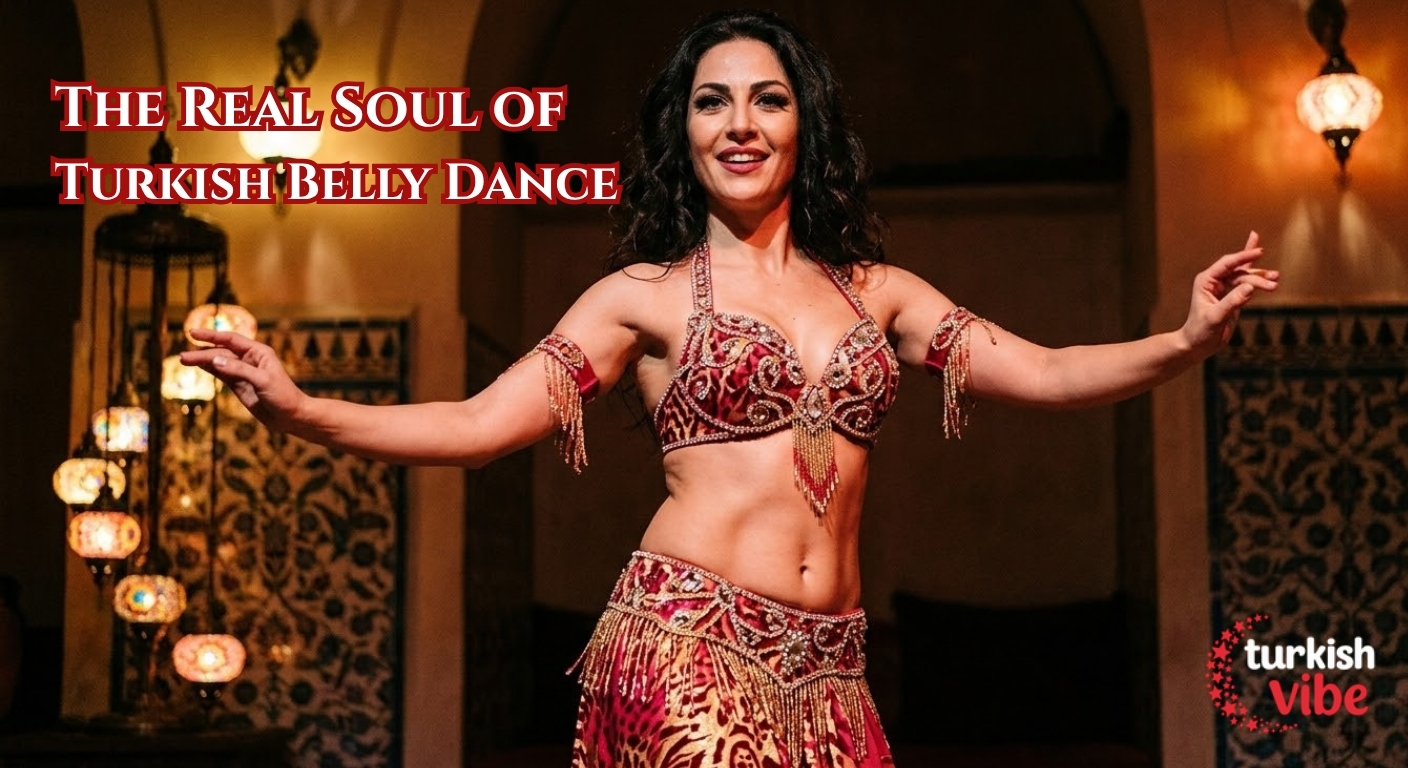
Turkish Belly Dance? I’ll be honest with you—there’s a specific sound in Istanbul that just bypasses your brain and goes straight to your hips. It’s that sharp, rhythmic “tak-te-ke-tak” of the darbuka (Turkish drum). You could be the shyest person in the room, but the moment that beat hits, your shoulders start moving on their own. That’s the magic of Oryantal—what the world knows as Turkish belly dance.
I’ve spent so many nights in this city watching these performances, and it never gets old. It’s not just a “tourist show” to us; it’s a raw, energetic celebration of being alive. But what makes the Turkish style of belly dance so different from the rest? Let’s dive in.
1. Where Does All This Energy Come From?
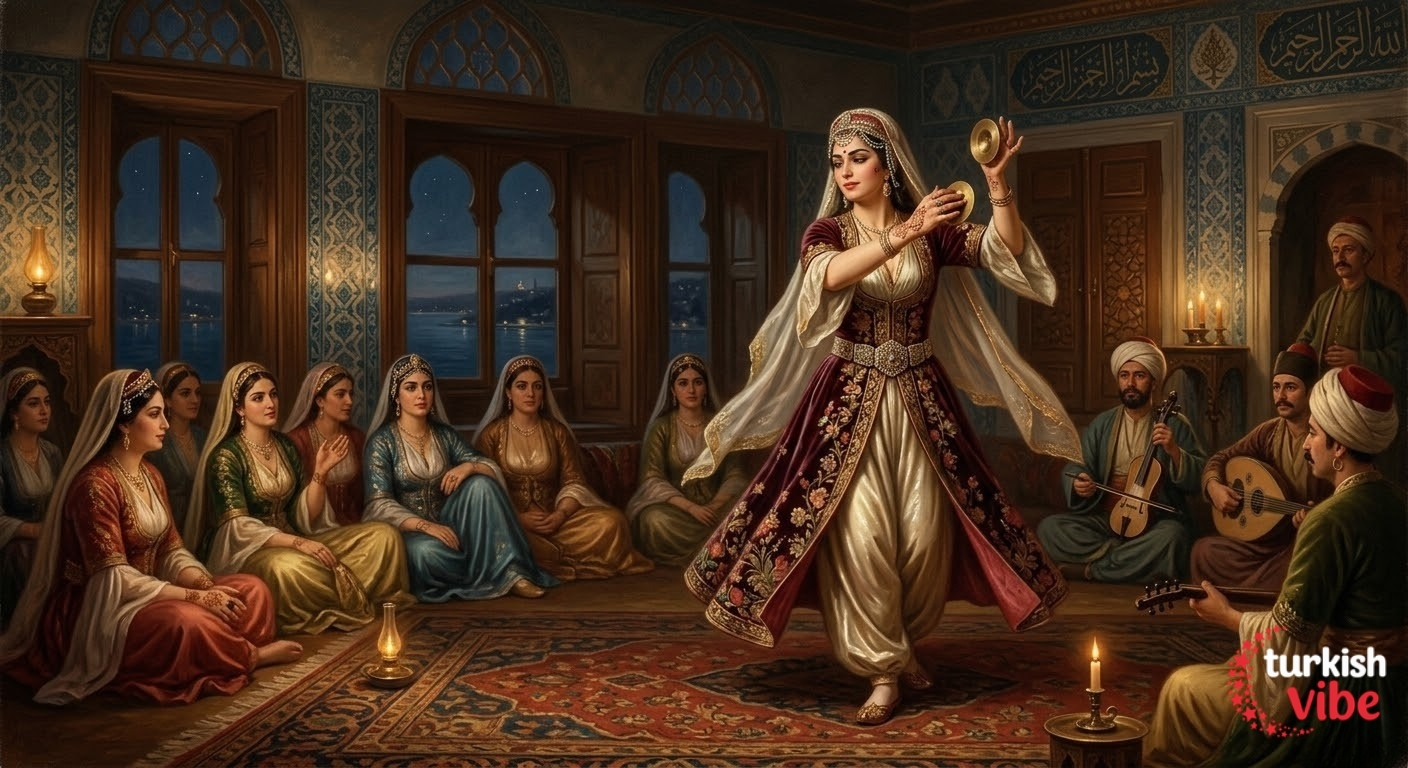
Contrary to the old Hollywood movies, Turkish belly dance history isn’t just about “orientalism.” It’s a wild, beautiful blend of Ottoman court elegance and the raw, untamed energy of Anatolian Romani (Gypsy) culture.
Back in the Ottoman days, dancers known as Rakkase performed with a certain grace in the palaces. But the high-energy, finger-snapping vibe we see today owes everything to the Romani influence. They brought the 9/8 rhythm (the famous Roman Havası), which is fast, complex, and honestly, a bit of a challenge even for the pros! It’s the heartbeat of our street celebrations and the core of traditional Turkish dance.
2. Why Turkish Style Hits Differently Than Egypt or Lebanon
If you’ve seen belly dancing in Cairo or Beirut, you’ll notice the Turkish Oryantal style hits differently. It’s like comparing a slow jazz ballad to a rock concert.
The Energy: We like it fast and athletic. Expect lots of jumps, spins, and pure power.
The Famous Floor Work: This is a signature Turkish move. Seeing a dancer drop to their knees and move with incredible fluidity while balancing a glass is something that still blows my mind.
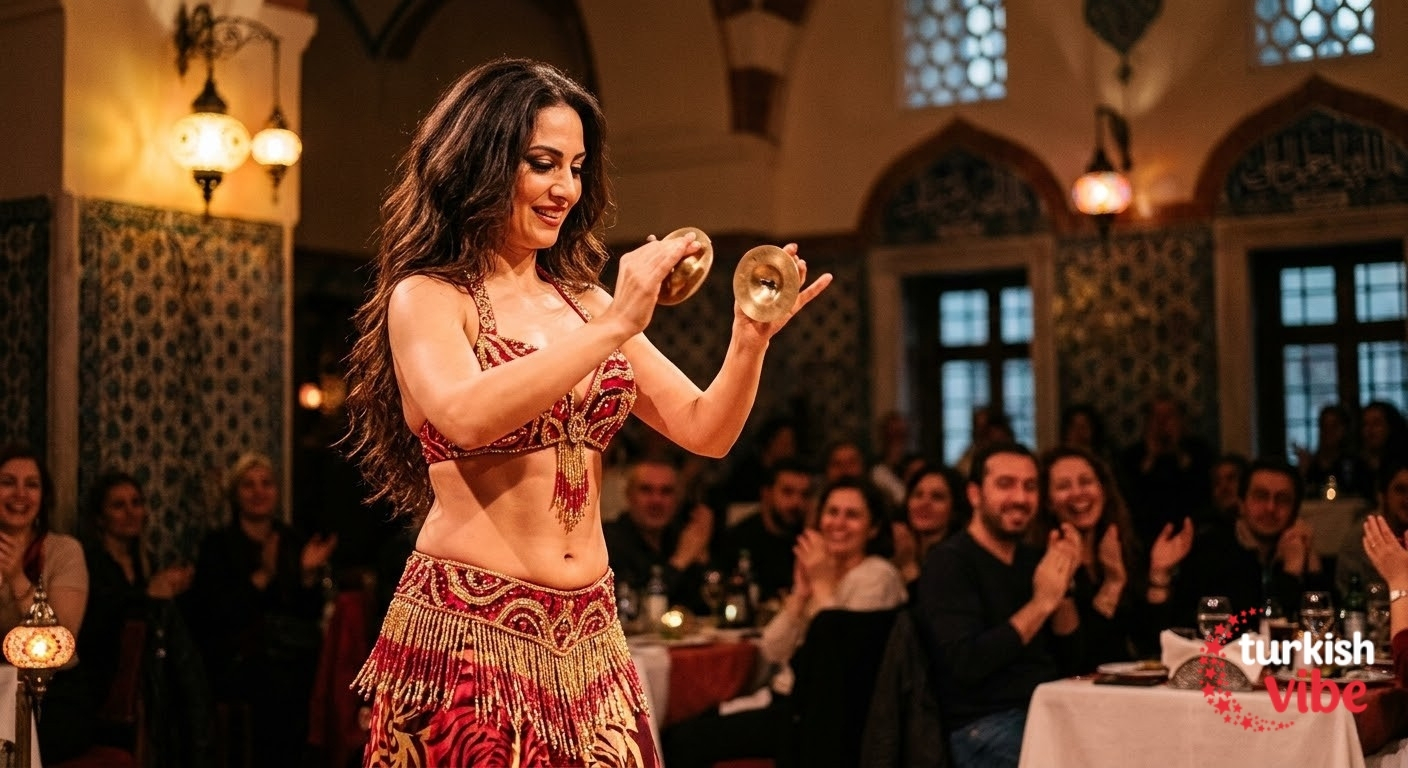
The Zils (Finger Cymbals): A Turkish dancer who doesn’t use zils is like a rockstar without a guitar. It adds a percussive layer that drives the entire band.
3. “How Do They Move Like That?” (The Technique)
I’ve tried a few moves myself (mostly in the privacy of my living room after a glass of rakı!), and let me tell you, it’s a full-body workout. It’s basically an Olympic sport disguised in glitter.
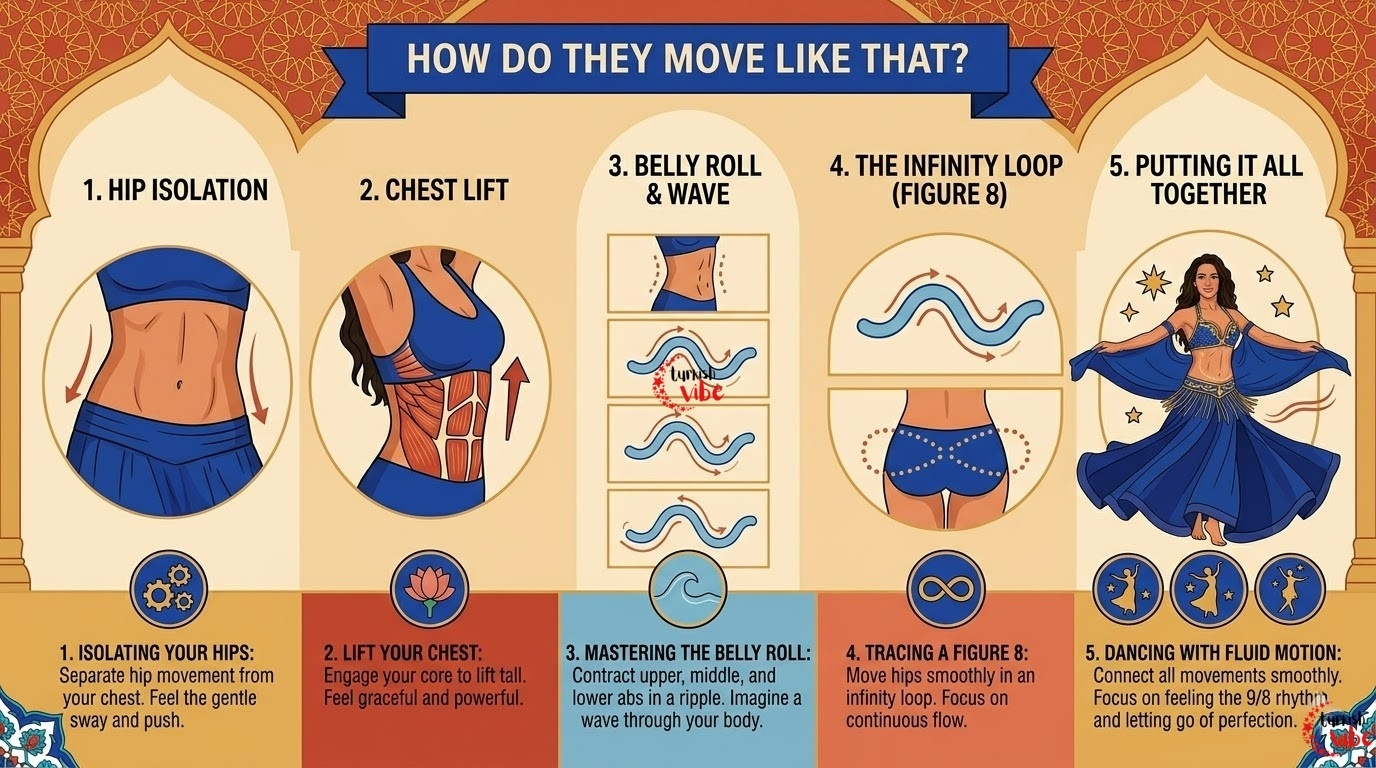
The Shimmies: It looks like the dancer is vibrating, but it’s actually controlled muscle contractions.
The Belly Roll: The classic move! It’s all about isolating the upper and lower abs—something I personally gave up on after my third piece of baklava.
Isolations: Moving the hips while the upper body stays perfectly still. It takes years to master this belly dance technique.
4. A Fun Myth: It’s Not Just for Women!
Here’s a little secret that surprises many of my friends when they visit Turkey: Oryantal isn’t just a “woman’s dance.” If you’re lucky, you might run into a Zenne—a male belly dancer.
This tradition actually goes way back to the Ottoman palaces. Back then, it wasn’t always appropriate for women to perform in certain public spaces, so talented male dancers took the stage instead. Today, Zennes are having a huge comeback in Istanbul’s nightlife. They bring a different kind of energy—often more acrobatic and incredibly theatrical. Watching a Zenne perform is a reminder that in our culture, the rhythm doesn’t care about gender; if you’ve got the soul for it, you dance!
5. The Costume: A 10kg Masterpiece
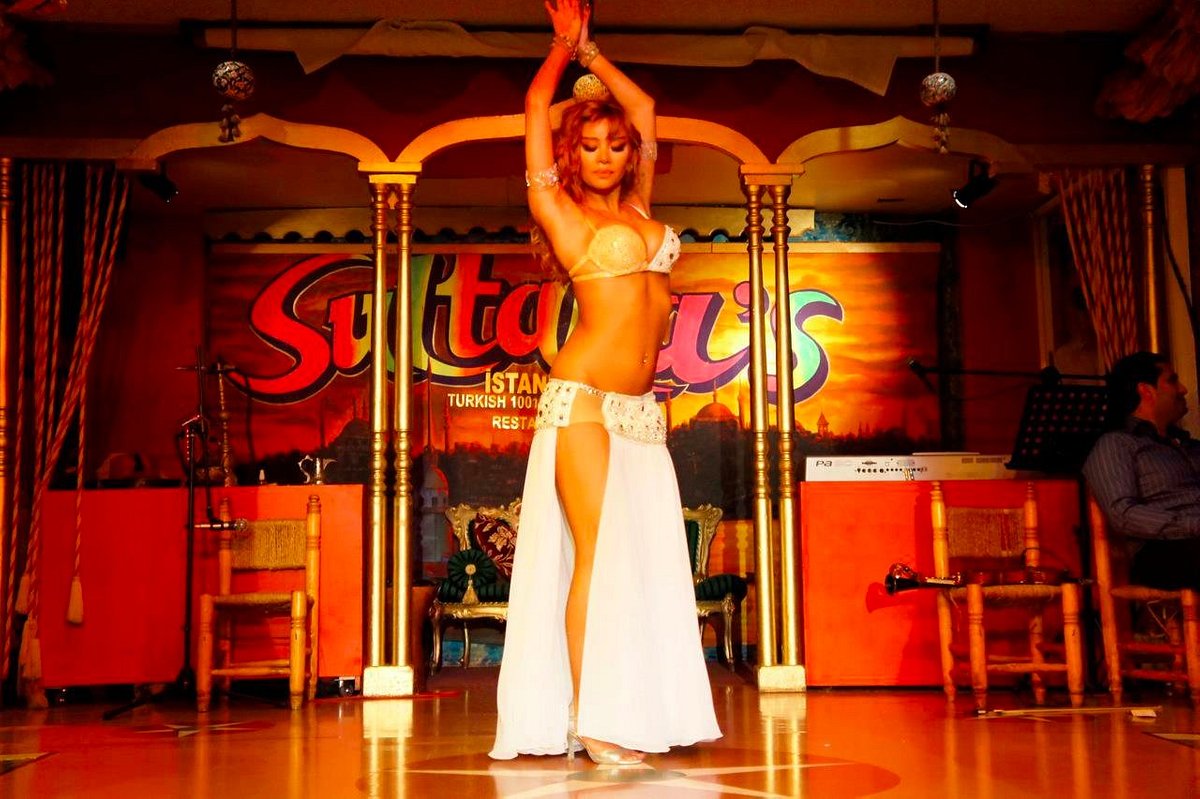
You can’t talk about Oryantal without the belly dance costume (Bedlah). These things are heavy—I mean, seriously heavy. We’re talking kilograms of hand-stitched beads, crystals, and fringes. When a dancer moves, the costume becomes an instrument itself, adding to the rhythm with every shimmy. It’s glamorous, dramatic, and unapologetically bold.
6. My Go-To Spots: Where to Actually Catch the Vibe in Istanbul
If you’re visiting and want to see the best belly dance in Istanbul, please skip the generic, overcrowded tourist boats. You want a place with soul.
Hodjapasha Cultural Center (Sirkeci): Set in a 550-year-old converted bathhouse. The acoustics are hauntingly beautiful, and the talent is top-tier.
Sultana’s Dinner and 1001 Nights: Legendary for a reason. It’s professional, high-energy, and feels like a classic Istanbul night out.
Nomads (Beşiktaş): For a more modern, “Cool Istanbul” take. It’s where the music feels contemporary but the roots are still deep.
7. A Quick Pro-Tip: Don’t Be Shy!
In Turkish culture, if a dancer comes to your table, they are inviting you into the party. It’s common to “tip” the dancer, but the best tip is your energy.
If they hand you a tambourine or pull you up to dance—just go for it! No one cares if you’re “good” at it. Just catch the rhythm, snap your fingers, and let the music take over. That’s the real Turkish Vibe. It’s not about perfection; it’s about the feeling.
Bonus: Famous Turkish Oryantal Belly Dancer Asena’s Performance:
: