 Discover all about Turkish People & Turkey! The most detailed information about Turkish Culture & Turkey, contents, topics of interest & much more…
10 Things That Shock Foreigners in Turkey — A Local’s Perspective
I’ve lived in Turkey my whole life. I’ve watched hundreds of tourists walk through this country wide-eyed, confused, overwhelmed, delighted — sometimes all four at once, within the same hour. And after years of hearing the same reactions, the same questions, the same “wait, is this normal here?” moments, I figured it was time to write it all down.
Not from a guidebook perspective. Not from someone who visited for two weeks and thinks they figured us out. But from someone who grew up here, who knows why we are the way we are, and who genuinely wants you to understand what you’re stepping into — so you can appreciate it properly, not just be bewildered by it.
Because Turkey will bewilder you. That’s not a warning. That’s a promise.
1. We Don’t Let You Be a Stranger for Long — And We Mean That
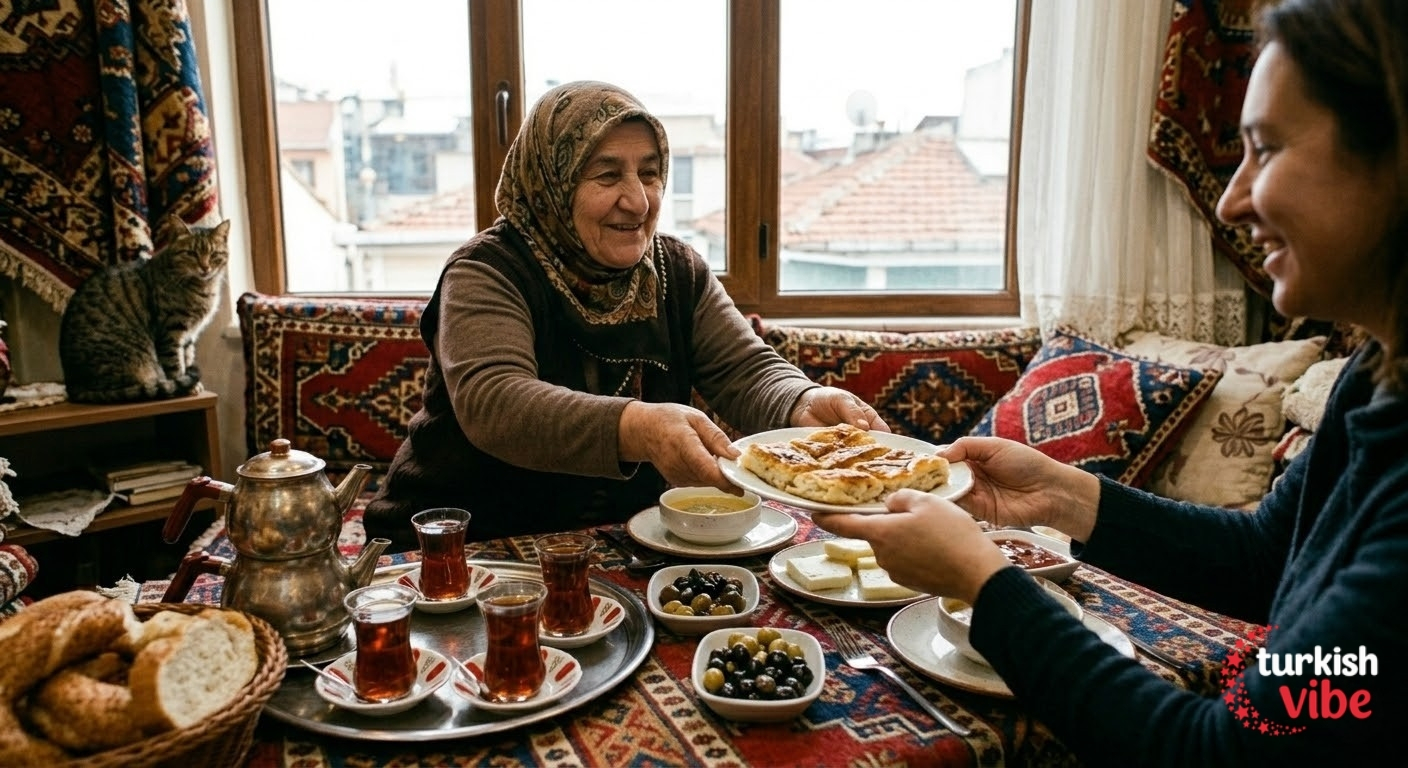
The number one thing foreigners comment on is the hospitality. And I’ll be honest: from the inside, we don’t even think about it. Offering tea to a guest — or to someone who just walked into your shop, or to a neighbor you bumped into on the street — is just what you do. It’s not a strategy. It’s not a performance. It’s so deeply wired into how we were raised that *not* offering would feel rude to us.
The Turkish word is “misafirperver” — someone who loves their guests. We teach this to children. My grandmother would be mortified if someone left her house without being fed. That’s not an exaggeration; that’s a cultural standard that has been passed down for generations.
So when you walk into a carpet shop and a glass of tea appears in your hand before you’ve said a word — that’s genuine. You might also end up being shown family photos and hearing about someone’s cousin’s wedding. That’s also genuine. We’re curious people. We like company. Try to enjoy it rather than look for an exit.
2. Tea Is Not a Beverage Here. It’s a Whole System.
I know every country thinks their tea culture is special. Ours actually is.
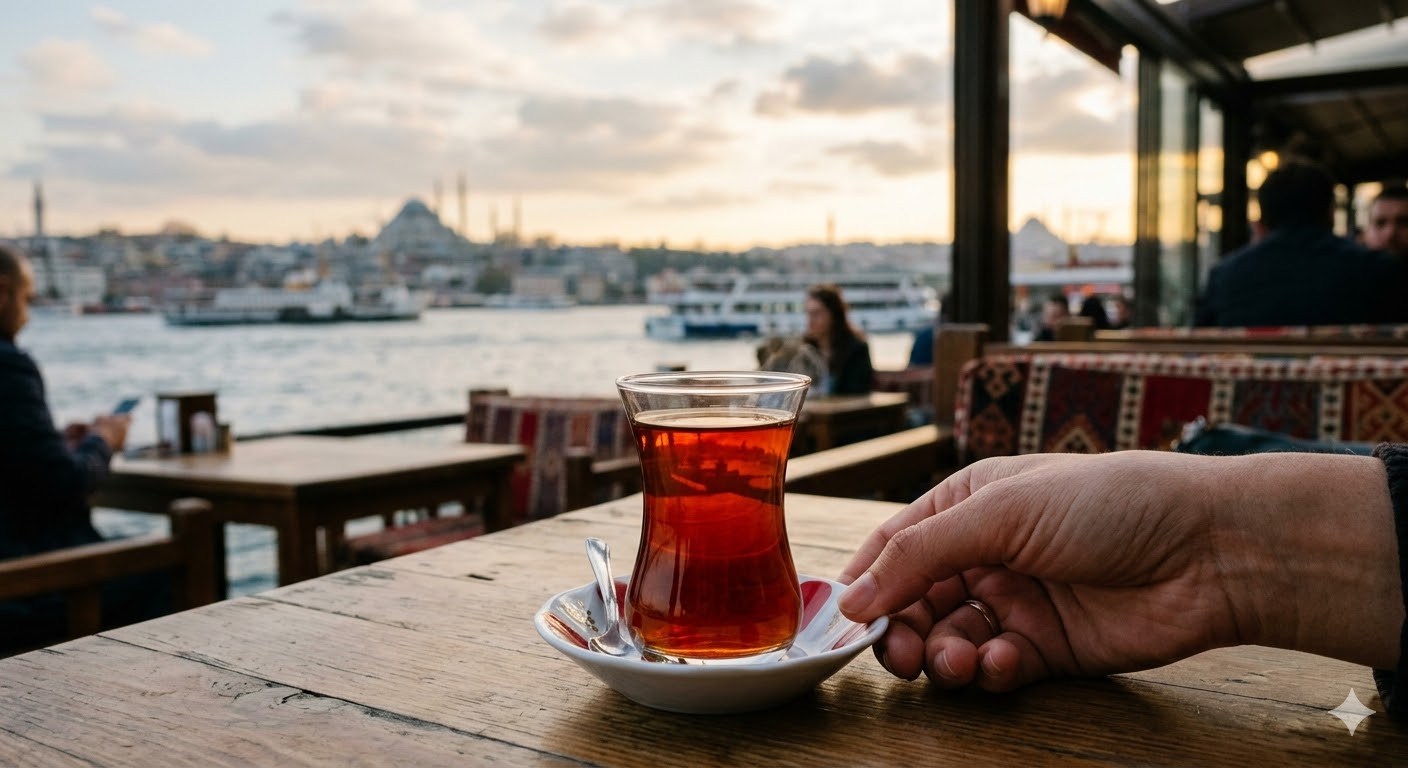
Turkey is one of the highest per-capita tea-consuming countries in the world, and we earn that title every single day. The small tulip-shaped glass — the *ince belli* — is as Turkish as it gets. Black, strong, no milk, two sugars on the saucer if you want them.
What visitors don’t understand at first is that tea is less about thirst and more about *transition*. You offer tea when someone arrives. You offer tea before a negotiation. You offer tea when you want to slow a conversation down and make it real. You offer tea when you have nothing else to offer but want to say: *you are welcome here.*
Refusing tea isn’t offensive exactly, but it does create a small social gap. People genuinely don’t know what to do with the moment. My advice to any visitor: just take the glass. Wrap your hands around it. Let the warmth do what it’s supposed to do.
And yes — we drink it all day. Morning, noon, evening. It’s not a caffeine thing. It’s a rhythm thing. For the Turkish tea recipe: how to make Turkish Tea
3. Our Breakfast Would Make Your Nutritionist Faint (In the Best Way)
I’m going to be biased here because I genuinely believe Turkish breakfast is one of the greatest meals on earth. I grew up with it and I still get excited about it.
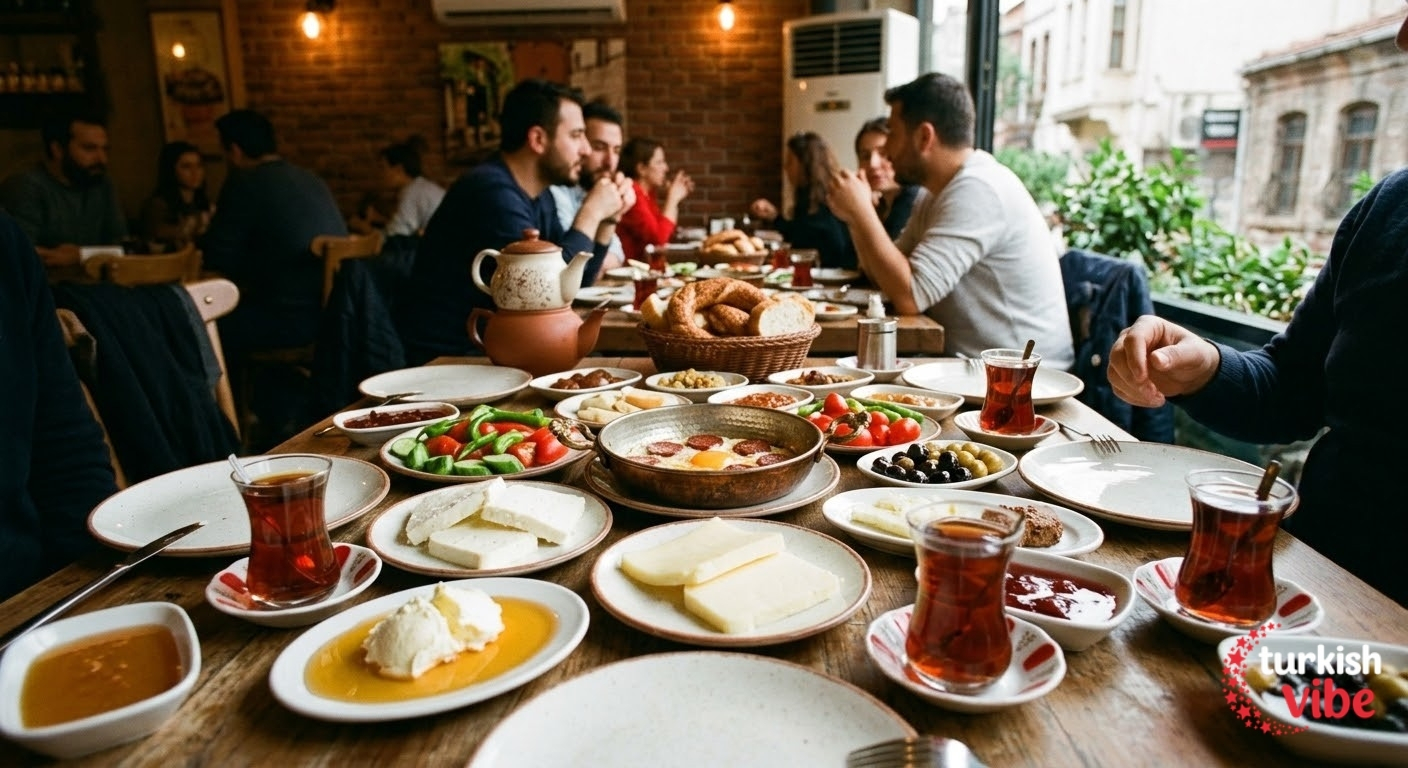
When foreigners sit down to a full kahvaltı (Turkish breakfast) for the first time, their first reaction is usually to look at the table, then look at me, then look at the table again, trying to count the plates. Olives — black and green. Several types of cheese. Sliced tomatoes and cucumbers. Soft-boiled or pan-fried eggs. Sucuk (imagine it like Turkish sausage) sizzling in a small copper pan. Honey pooled over thick clotted cream. Jam. Fresh bread still warm from the oven. Fruit. And tea. Obviously tea.
This is a regular morning. Not a hotel brunch. Not a special occasion. A Tuesday.
The Van breakfast, from the eastern city of Van, takes this to another level entirely — reportedly up to 40 different dishes — and has become so famous that Van-style breakfast restaurants have spread across the country. If you’re in Istanbul and you haven’t found a proper breakfast spot yet, that’s the first thing to fix.
We say kahvaltı for the breakfast means “before coffee,” but honestly, it’s become its own event that has outgrown the word. Foreigners often tell me it was one of the best meals of their entire trip. I nod and think: yes, of course it was.
If you visit anywhere in Türkiye, you absolutely must try “Serpme Kahvaltı” (a type of Turkish breakfast spread). For more information: Turkish Breakfast (Serpme Kahvaltı)
4. Yes, Those Cats Own the City. We’re Fine With It.
Istanbul has millions of residents. A significant portion of them have four legs and couldn’t care less about you.
The street cats of Turkey (especially Istanbul) are not strays in the way that word implies neglect or danger. They are community animals. They are fed by shopkeepers, given small wooden shelters by city residents, treated by vets, and tagged in the ear to show they’ve been vaccinated and neutered. They sleep in mosque courtyards, sit on restaurant chairs, and stare at you from bookshop windows with the calm confidence of someone who has never paid rent and never intends to.

This is not accidental. Turks have a long cultural and historical relationship with cats. There’s an old Islamic tradition of treating cats with particular respect (the Prophet Muhammad reportedly loved cats) and that has folded into a broader cultural tenderness toward them.
Dogs are treated similarly, though with more variation by region. In many neighborhoods, the local stray dog has a name, a feeding schedule, and a de facto territory that everyone respects.
If you come from a country where stray animals are impounded and removed, this will look chaotic at first. Watch it for a day or two and you’ll realize it’s one of the most quietly civilized things about how we live.
This topic is on a whole different level… I’ve prepared a special article specifically about the street cats of Istanbul. They’re present in daily life, on public transport, while shopping, even at university. I strongly recommend you read this article I’ve prepared about the true owners of Istanbul! Capital of the cats

5. Personal Space? We Don’t Know Her.
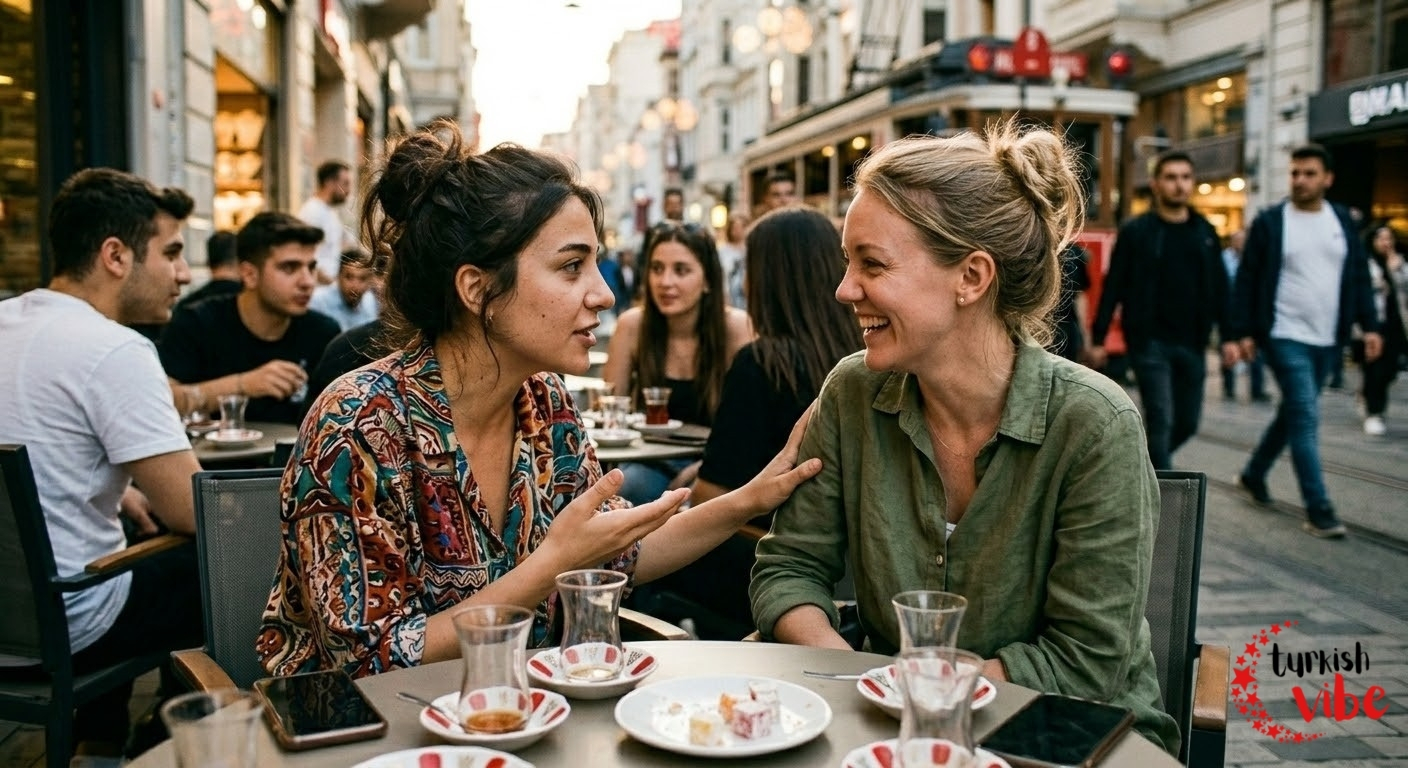
This is perhaps the biggest “culture shock” for people coming from Northern Europe or North America. In Turkey, the concept of “personal space” is… flexible. Very flexible. If you’re standing in a queue, the person behind you might be close enough to read the messages on your phone.
If you’re talking to a local, they might touch your arm to emphasize a point or stand much closer than you’re used to. On a crowded tram in Istanbul, “excuse me” is less of a request for space and more of a notification that we are all now sharing the same square inch of floor. It’s not aggression. It’s not a lack of respect. It’s just that we are a high-contact, social culture. We don’t see physical distance as a requirement for politeness. In fact, standing too far away can feel cold or distant to us.
My advice: lean into it. If someone pats your shoulder or stands a little close in line, they aren’t invading your bubble—they just don’t believe bubbles should exist between people.
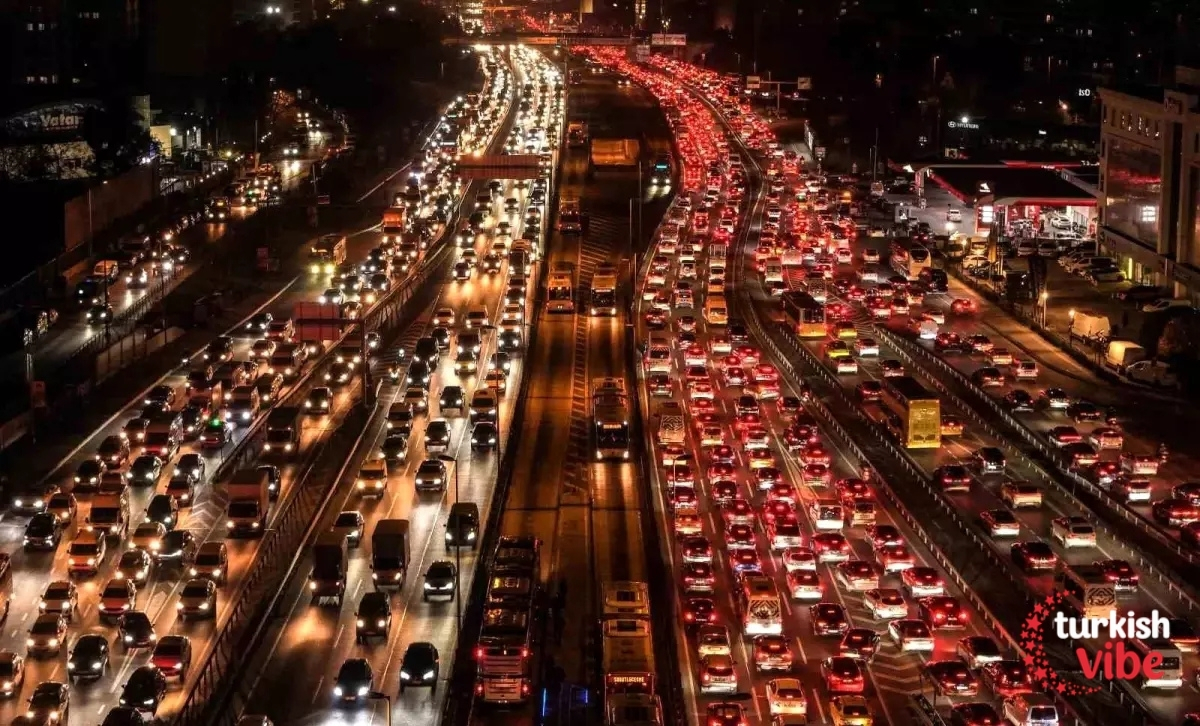
6. Our Traffic Looks Like Chaos. It Has Its Own Logic.
I’m not going to defend Turkish driving. I will say that it works in ways that are not immediately obvious.
What looks from the outside like complete disorder is actually a system built on assertiveness and mutual reading. Turkish drivers are very good at understanding what the car next to them is about to do — because everyone is always about to do something unexpected, and somehow, everyone else knows this. The horn is communication, not aggression. A quick beep means “I’m here.” A longer one means “I’m going.” It’s a language.
Pedestrian crossings are the part I can’t fully justify. Walk with confidence, make eye contact with drivers, and cross in groups if possible. The instinct of Turkish drivers to stop kicks in when they see clear intent. Hesitation reads as a mixed signal.
Istanbul is in its own category. It is a city of fifteen million people built on hills across two continents, with roads that were not designed for anything close to current traffic levels. The fact that it functions at all is either a miracle or a testament to collective improvisation. Possibly both.
Rent a car outside the big cities — the countryside, the Aegean coast, the Black Sea mountains — and you’ll find driving genuinely pleasant. Istanbul is a different conversation.
7. History Here Is Just… Everywhere. Casually.
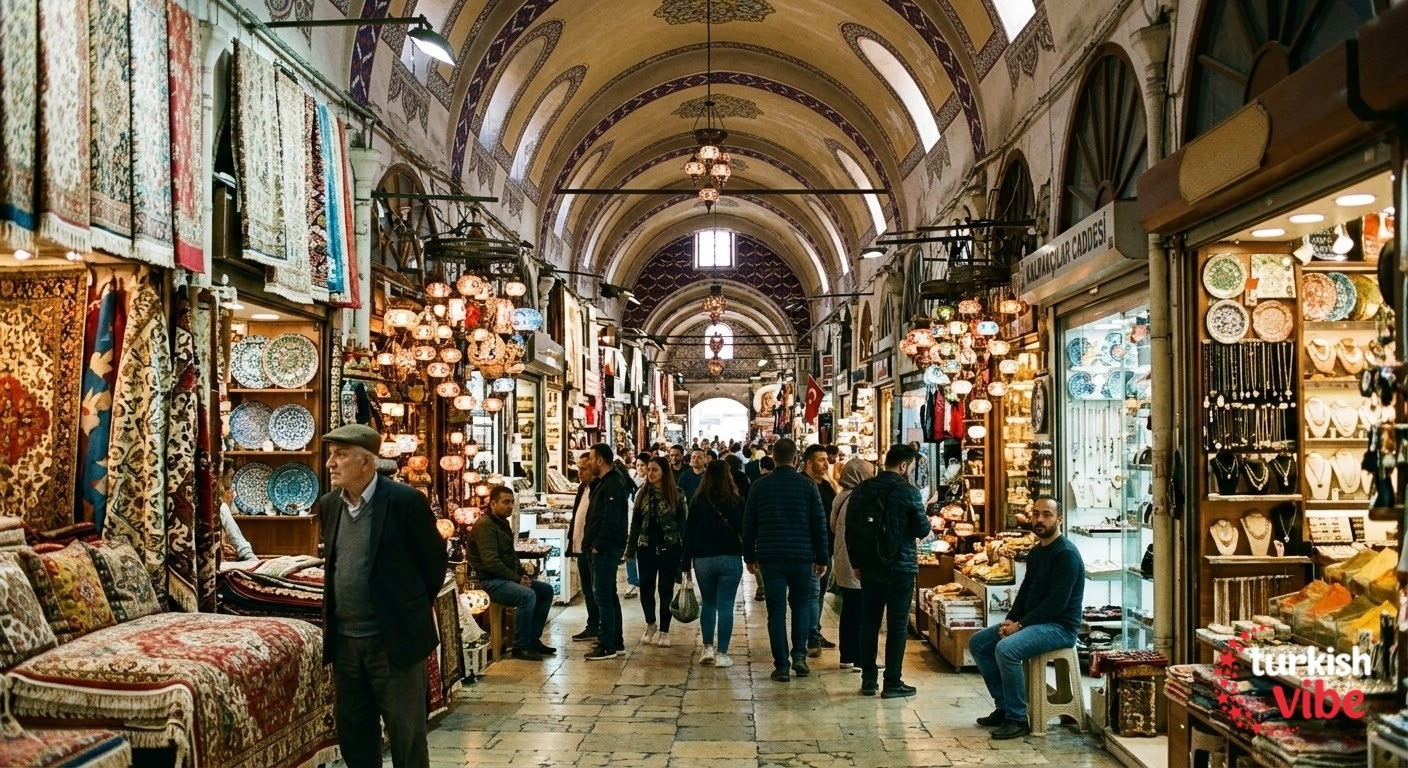
I’ve watched foreign visitors stop completely still in the middle of a street because they realized the wall next to them was Byzantine. I understand the reaction, but from my side of it, it’s a different kind of feeling — more like growing up next to something so large and old that you stop being able to see its scale.
Turkey has been continuously inhabited and fought over for thousands of years. The Hittites, the Greeks, the Romans, the Byzantines, the Seljuks, the Ottomans — each left layers that the next civilization built on top of, repurposed, or simply left where it was. In some small Anatolian towns, ancient column fragments are used as fence posts. Not as a statement — just because they were there and sturdy.
The big sites — Ephesus, Göbekli Tepe, the Hagia Sophia, Pamukkale, Troy — are staggering and well-documented. What doesn’t get documented as much is the texture of everyday historical density. The way a mosque might incorporate Byzantine stonework. The way a coastal town might sit directly on top of a Hellenistic city. The ruins visible from a highway rest stop.

For those of us who grew up here, history can start to feel like wallpaper. I’ve learned to see it again through the eyes of visitors, and now I make a point of actually going to the sites in my own country rather than saving them “for someday.” If you’re visiting, don’t just hit the famous ones. Ask locals what old thing is nearby. There’s almost always something.
8. The Food You’ve Had “Back Home” Was a Rough Draft
I’ll be direct about this: Turkish food outside of Turkey is usually a compromise version. The spice blends are different, the meat quality is different, the freshness of the produce is different. It’s not bad — it’s just not the same thing.
Turkish cuisine is also vastly more regional than most outsiders realize. The food of the Black Sea coast — anchovy-heavy, cornbread-forward, intensely green — has almost nothing in common with the food of southeastern Anatolia, where Gaziantep’s spice traditions and pistachio-laden desserts define the table. The Aegean diet is olive oil and herbs and slow-cooked vegetables. Istanbul pulls from all of it, plus its own Ottoman palace traditions.
Kebab alone is a world. Adana, Urfa, İskender, şiş, döner — each one has a specific origin, a specific preparation, a specific context in which it’s eaten. Ordering the wrong kebab in the wrong city isn’t an insult, but locals will absolutely have an opinion about it.
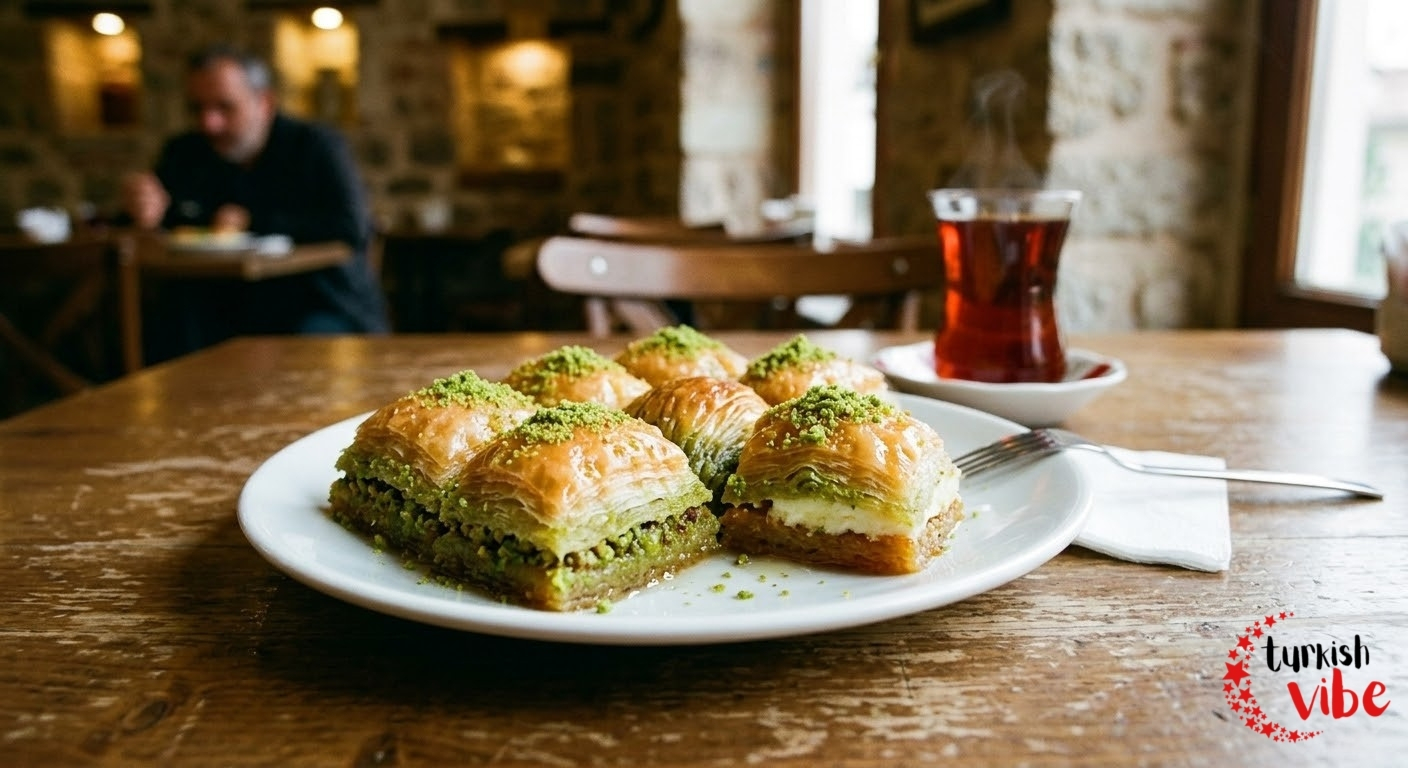
And baklava. I need to say something about baklava. What many visitors have eaten under that name abroad is not the thing we’re talking about. Real baklava — made with fresh, thin-as-paper phyllo, ground Antep pistachios, and the right ratio of clarified butter to syrup — is a legitimately transcendent food experience. Go to Gaziantep if you can. Or find the best baklava shop in Istanbul, sit down with a plate, and recalibrate everything.
9. The Call to Prayer Will Reset Your Internal Clock
Five times a day, the ezan rises from minarets across the country. In Istanbul, where mosques are close enough that their calls sometimes overlap and echo off each other, it becomes something close to a soundscape.
Non-Muslim visitors often describe hearing it for the first time as one of the most unexpected emotional experiences of their trip. It’s ancient and melodic and present in a way that few sounds in the modern world are — not background music, not notification noise, but something with real weight and intention.
What I find interesting, living inside this culture, is how it functions as a kind of collective time marker even for people who aren’t observant. Something about the rhythm of five daily calls shapes the day at a subconscious level. Shops pause. Conversations break for a moment. It doesn’t demand anything from you. It just reminds you that time is passing.
If you’re staying in Istanbul and your room faces a mosque, you will hear the morning call, the *fajr*, around sunrise. Light sleepers should pack earplugs — or embrace it and get up to watch the city wake up, which I’d actually recommend at least once.

10. We Will Ask You Personal Questions Immediately, and We’re Not Being Rude
Where are you from? Are you married? Do you have children? What do you do? How much did you pay for that?
In many Western cultures, these questions are reserved for people you know well. In Turkey, they’re a normal part of greeting a stranger. We’re not prying. We’re orienting — trying to understand who you are, where you fit, what connects you to us. Relationship-building here moves through personal information, not around it.
The flip side of this is that we’re also quite open with our own information. Ask a Turk where they’re from and you might get a twenty-minute story about their family’s village, their grandmother’s cooking, and three strong opinions about which city is actually the best in Turkey. This is not oversharing. This is conversation.
One thing that makes us particularly animated: if you’ve visited a part of Turkey that the person you’re talking to is from, you’ve unlocked something special. Mention that you went to Trabzon to someone from Trabzon and watch what happens. We love our regions, we love our hometowns, and we especially love when foreigners appreciate them.
Bonus: Turkey Is Not One Place. It’s Many.
The last thing that shocks most visitors — usually on their second or third trip — is realizing how much they haven’t seen.
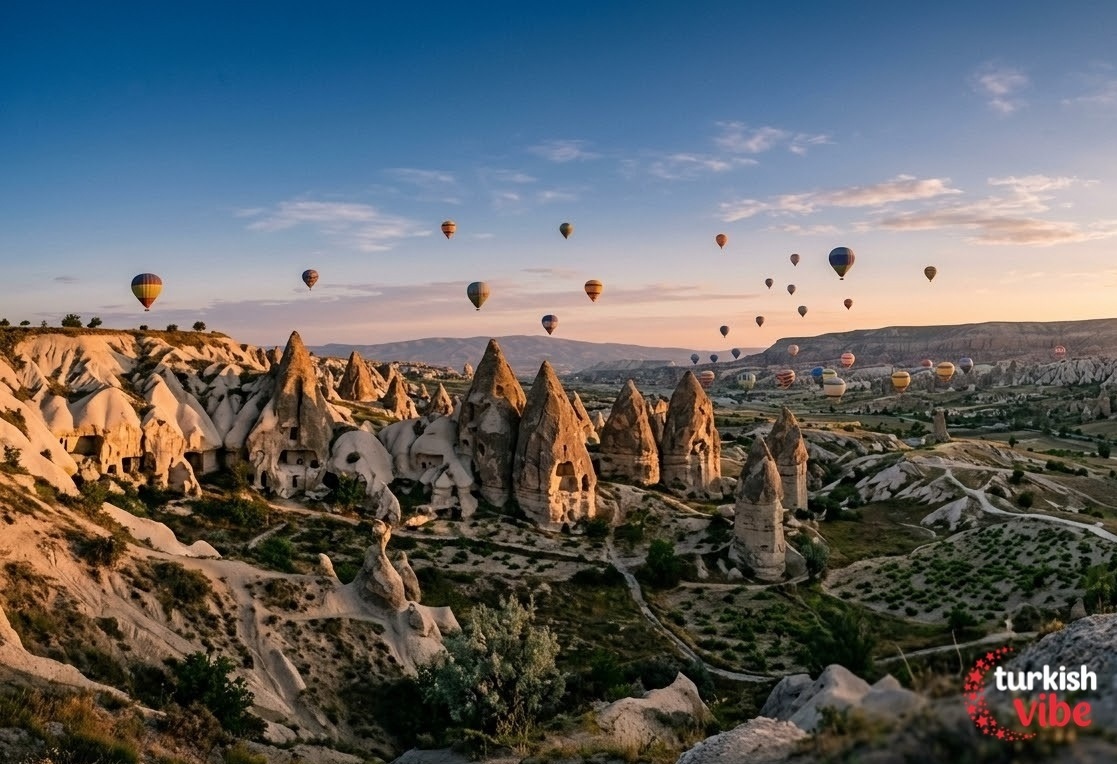
Most first-timers come to Istanbul, maybe add Cappadocia, maybe the Aegean coast. That’s already more than a week of genuinely remarkable experiences. But Turkey is enormous — roughly the size of Texas and California combined — and the regional differences across it are not subtle. The Black Sea mountains are lush and green and foggy and feel nothing like the volcanic valleys of central Anatolia. The Kurdish southeast has a completely different architectural vocabulary from the Ottoman-influenced northwest. The Mediterranean coast moves at a slower pace than Istanbul in ways that feel like a different country.
I’m biased, obviously. This is my home. But I’ve also traveled enough to know that Turkey is genuinely underexplored relative to its depth, and that most visitors leave having only scratched the first layer.
Come back. Go further. Ask the locals where to go next instead of checking a list. That’s when Turkey really opens up.
Quick Tips for the Bewildered
- Learn these words: Merhaba, Teşekkürler, Afiyet Olsun.
- Keep a small change: For public toilets or small tips.
- Take your shoes off: Before entering a Turkish home.
Final: I run TurkishVibe.com because I want you to experience Turkey the way it actually is — not a postcard version, but the real, layered, generous, complicated, beautiful thing. Stick around and I’ll keep showing you more.