 Discover all about Turkish People & Turkey! The most detailed information about Turkish Culture & Turkey, contents, topics of interest & much more…
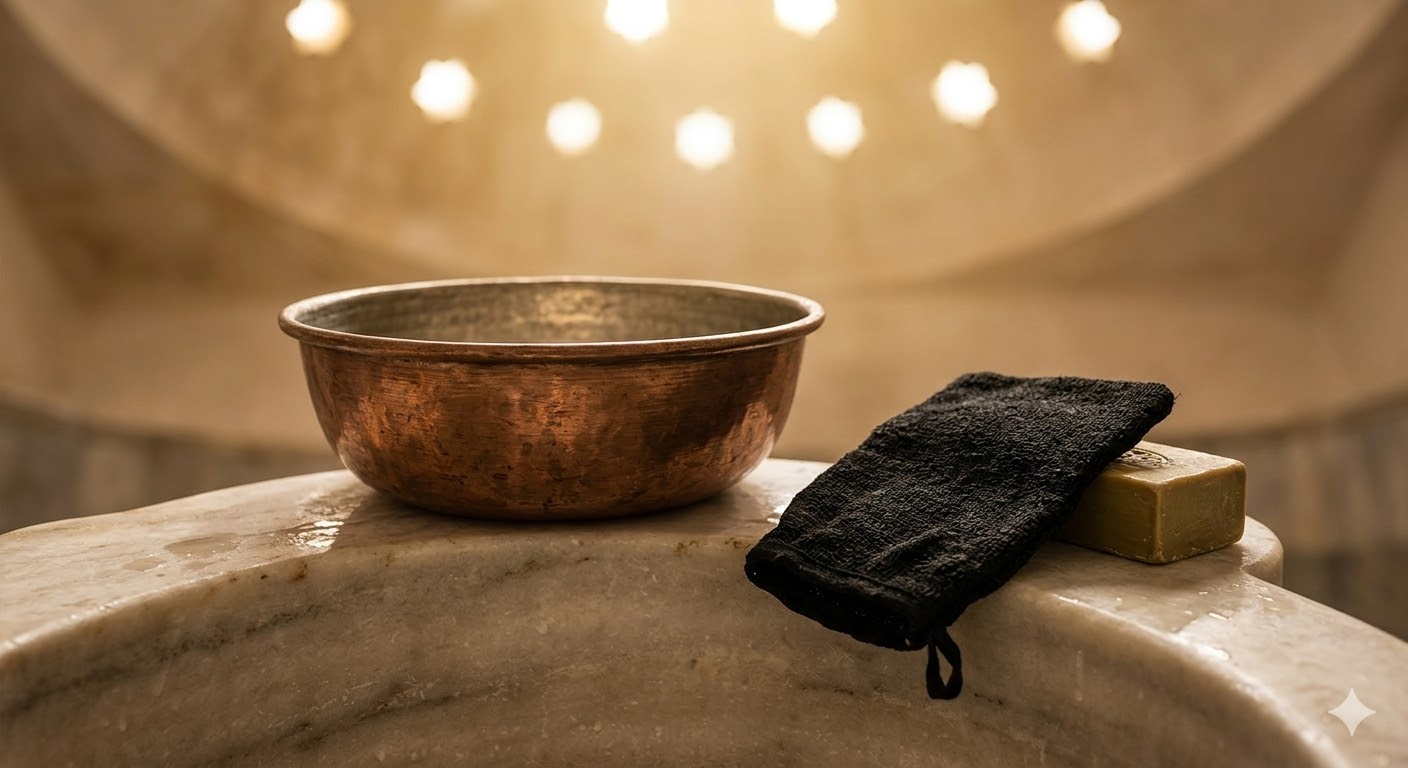
“Imagine stepping into a space where time slows down, surrounded by marble that has witnessed centuries of whispers, laughter, and cleansing. A place where the steam embraces you, and a stranger handles you with the care of a newborn. This is the Turkish Hammam—a ritual that is far more than just a bath; it is a profound social and spiritual experience. But for a first-timer, the prospect of navigating this ancient ritual can be intimidating. Don’t worry. This guide is your friendly companion, ensuring you step into the steam with confidence and step out feeling, quite literally, born again.”
The Soul of the Hammam: More Than Just Soap and Water
Before we dive into the ‘how-to,’ it’s essential to understand the ‘why.’ The Turkish Hammam, a descendant of the Roman bathhouse, was perfected by the Ottomans. It wasn’t just a place for hygiene in an era without indoor plumbing; it was a sanctuary. It was where marriages were negotiated, gossip was shared, and spiritual purification took place before prayers. When you enter a hammam, you are stepping into a living museum of social history.
First Things First: The Hammam Vocabulary
To feel like an insider, you need to know the terms. Here are the essentials:
Camekan: The grand entrance hall and reception area, where you’ll undress and relax after your bath.
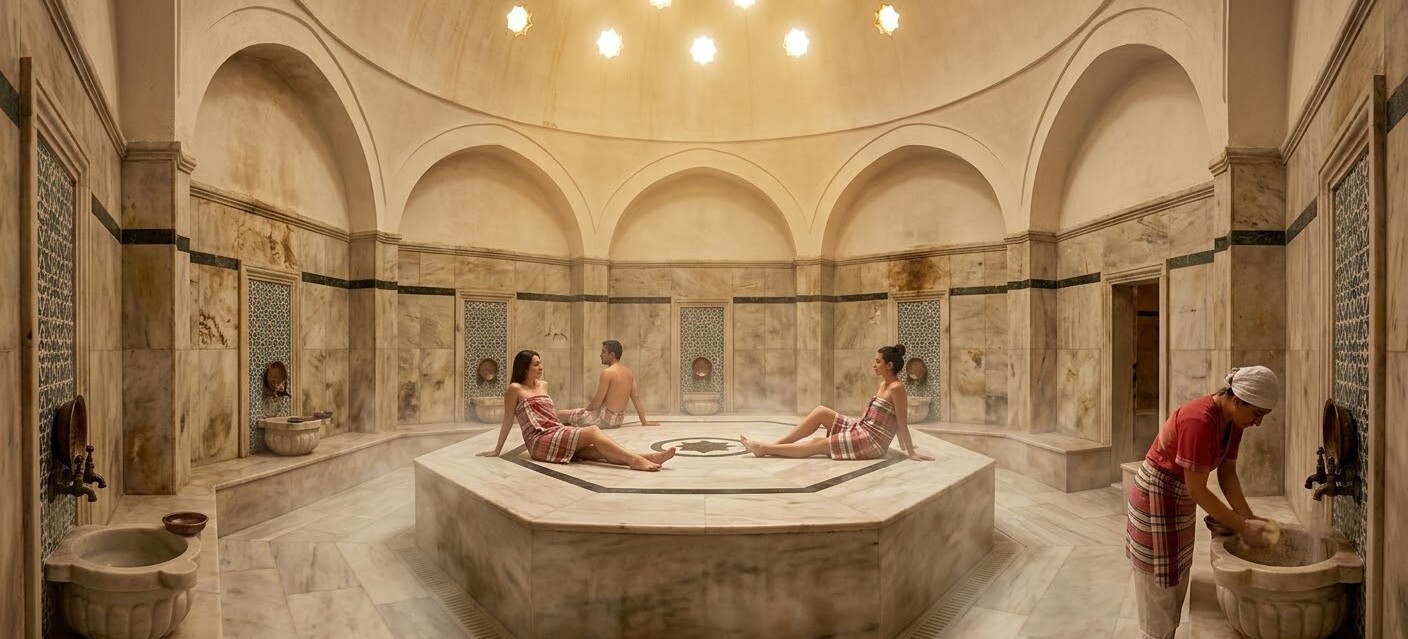
Sıcaklık (or Hararet): The central, hot steam room, usually domed with beautiful star-shaped light holes.
Göbek Taşı: The large, heated marble platform in the center of the sıcaklık. This is where the magic happens.
Kese: The rough, handmade mitt used for exfoliation. It will change your life (and your skin).
Tellak (Male) / Natır (Female): The professional attendant who will perform the kese and soap massage. They are artists of cleanliness.
Pestamal: The traditional, flat-woven cotton towel used to wrap your body. It is lightweight, absorbent, and mandatory.
Your Step-by-Step Survival Guide
The most daunting part is knowing what to do. Let’s walk through the ritual, step by step.
Step 1: The Arrival and Undressing
Upon entering the Camekan, you will be greeted and given a locker key. You will undress completely in a private cubicle. This leads us to the biggest question: Nudity.
The Rule: In the main steam room, total nudity is a no-no.
For Men: You will wrap the Pestamal around your waist. Many men choose to wear swim trunks underneath, but the pestamal is the authentic way.
For Women: Most women wear a bikini or swim trunks and a bikini top under their pestamal. You can be fully wrapped, but you need appropriate bathwear beneath.
Step 2: Acclimatizing in the Steam Room
You will enter the Sıcaklık. The air is thick with steam and the scent of soap. The first 15-20 minutes are for relaxing. Find a spot near a marble basin (kurna), and use the metal or plastic bowls provided to pour warm water over yourself. This softens your skin and prepares you for the next stage.
Step 3: The ‘Göbek Taşı’ Experience
When you are ready (and your attendant is ready for you), you will lie down on the central, heated marble platform—the Göbek Taşı. It’s warm and soothing. Your attendant will guide you to lie on your back or stomach. Just relax and breathe.
Step 4: The Kese (The Ritual of Exfoliation)
This is the moment of truth. Your attendant, armed with the Kese, will use vigorous, long strokes to scrub your entire body. Do not be alarmed by the ‘rolls’ of dead skin that appear; this is the goal! It is a sign of deep cleansing. The attendant will rinse you with warm water, revealing incredibly soft, new skin beneath. It can feel a bit rough, but the result is unparalleled.
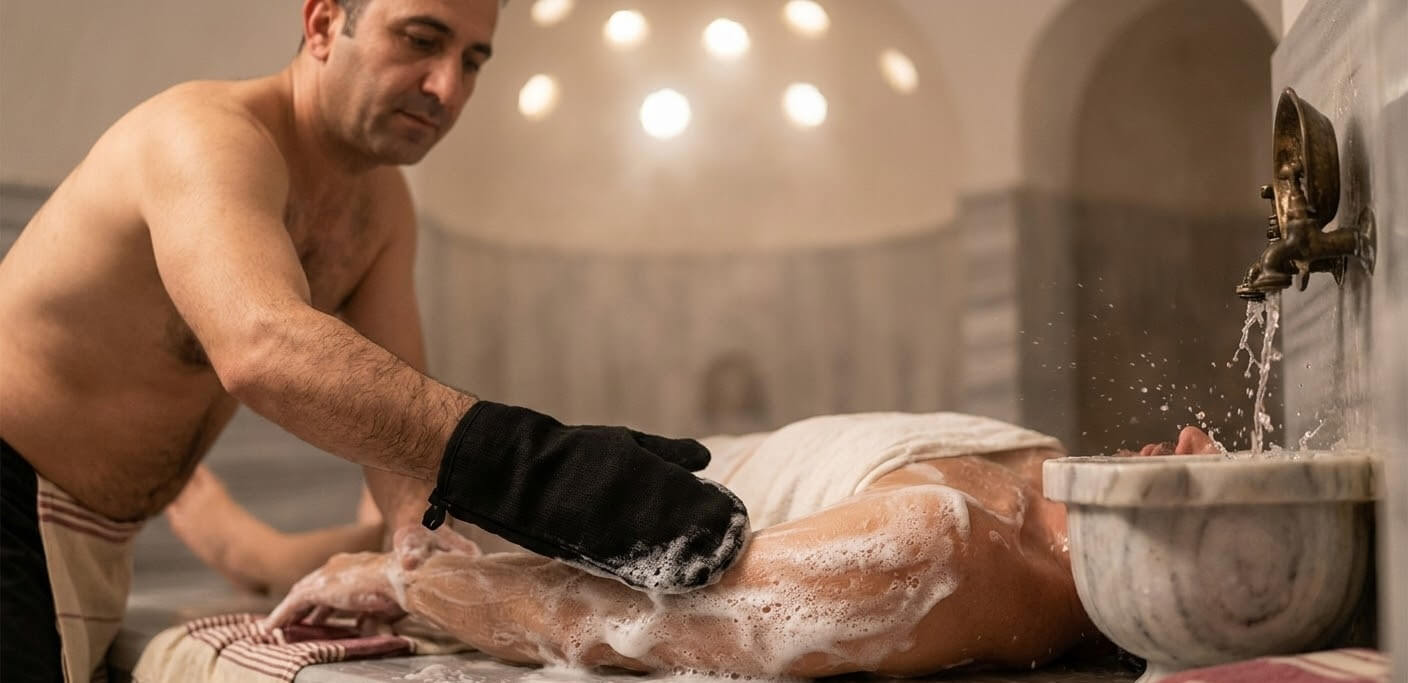
Step 5: The Soap Massage and Final Rinse
After the kese, your attendant will use a cloth bag to create a mountain of luxurious, olive oil soap suds. This ‘cloud’ of foam will cover you from head to toe. A gentle, kneading massage follows, washing away the last remnants of dirt and dead skin. A final, often invigoratingly cool rinse, and you are done.
The Afterglow and Tipping
After your ritual, you will be given fresh, dry towels. You return to the Camekan to relax, often on a comfortable sofa. This is the moment to enjoy the “afterglow.” Order a traditional glass of Turkish tea or, even better, a cold, salty Ayran. The feeling of cleanliness and relaxation is profound.
Tipping Etiquette: Tipping is expected and highly appreciated. A good rule of thumb is to tip around 10-15% of the total service cost, given directly to your attendant (Tellak or Natır).
Conclusion: Feeling Born Again
“The Turkish Hammam is an experience that stays with you. It is a moment of vulnerability that rewards you with a profound sense of well-being. Yes, it requires a bit of trust and a step outside your comfort zone, but the reward—a feeling of being, quite literally, ‘born again’—is worth every moment of initial hesitation. So, find a historic hammam, trust the process, and embrace this timeless ritual. You can thank me later.” Just like the Nazar Boncugu (Turkish Evil Eye) protects your soul, the Hammam protects your body’s energy.
“My first hammam experience was in a historic bathhouse in Istanbul, a gift from my grandmother before I left Turkey. I remember the overwhelming steam and the natır’s firm, yet motherly hands. I left that place not just clean, but lighter, as if I’d washed away not just dirt, but worry itself. I hope your experience is just as transformative.”